
Nuno Firmino
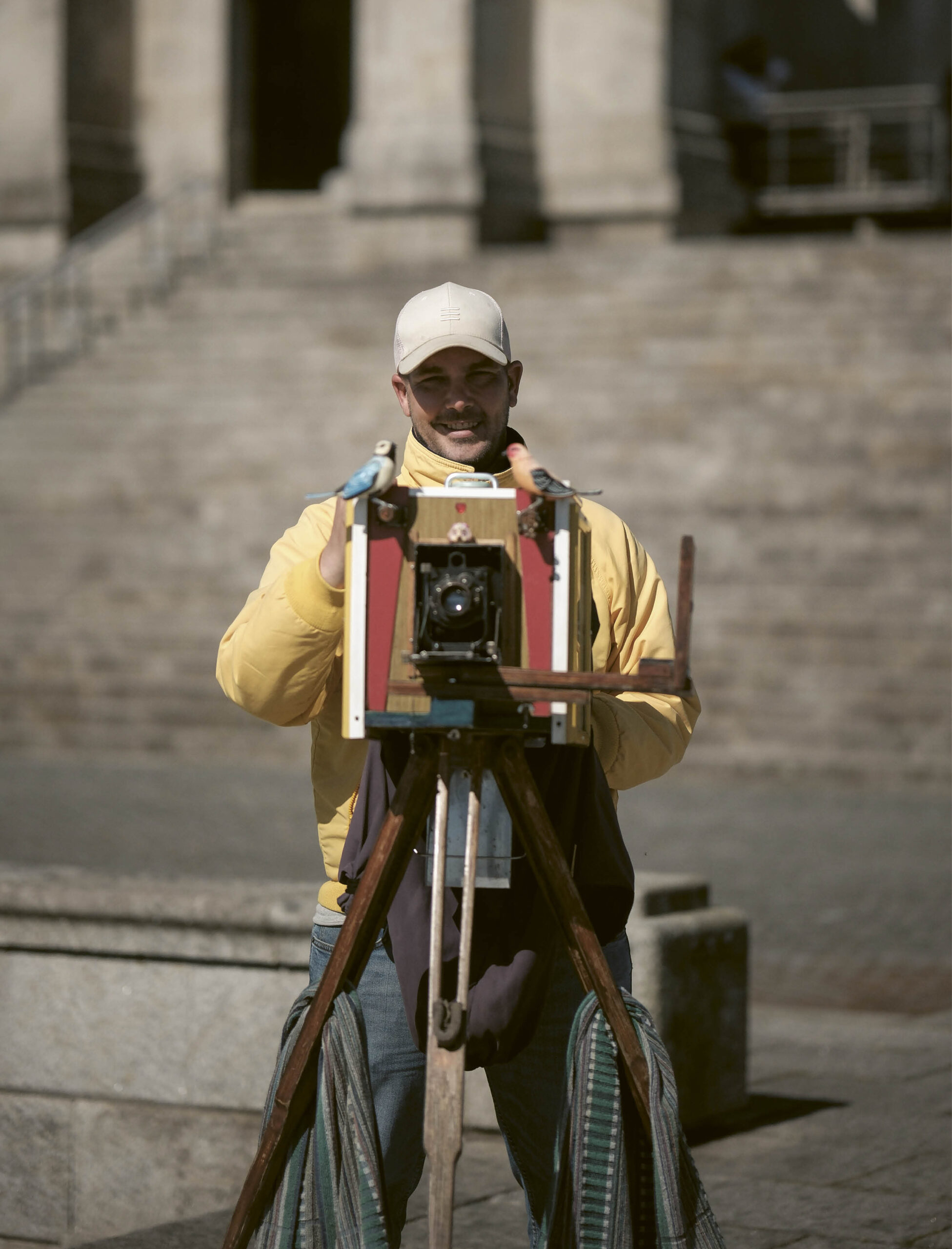
O avô colecionava relógios. “Gosta de coisas pequeninas. Tem as ferramentas e tudo…” Abria a máquina e “com a calma dele”, que a pressa é inimiga do acerto, sabia qual a função de cada peça na engrenagem miúda. “Se abrires, nunca mais montas isto!…”, avisa-nos Nuno Firmino, neto de Fernando Augusto Firmino, construtor de máquinas fotográficas que todos os anos gostava de fazer uma para si próprio. “A máquina dele era a melhor”, exclama, a apontar para o muro onde o avô espalhava as peças e se entretinha na escadaria da Basílica de Santa Luzia, com vista privilegiada sobre Viana do Castelo e sobre a orla costeira por aí fora. “Era a oficina dele. Fazia as máquinas para ele e para os outros…”
Todas as pontas da história da fotografia a la minuta no monte de Santa Luzia vão dar invariavelmente a Manuel Gonçalves, que passou mais de 80 anos no seu posto de trabalho, e à Póvoa de Varzim, origem deste e de outros fotógrafos. Nuno, de 39 anos de idade, faz parte da última geração. “O senhor Manuel é tio do meu pai, que ainda alterna comigo. Um dia está cá ele, outro eu…”, explica o fotógrafo, que esteve quase dez anos a apontar para o Santuário de São Bento da Porta Aberta, na freguesia de Rio Caldo, Terras de Bouro, e que agora está em Viana à espera de clientes, turistas, emigrantes, excursões de pessoas que querem subir ao zimbório e imaginar que estão nas nuvens ou simplesmente de saudosistas, daqueles que já têm em casa uma fotografia antiga e querem renovar essa cápsula do tempo. “É como o homem dos gelados: as pessoas vêem que ficou bonito e também querem. Acontece muito com os mais velhos das aldeias, que primeiro dizem que não querem uma fotografia a preto e branco… E já dizia o meu avô: ‘Fotografias a cores é estragar a profissão…’”, sublinha Nuno, com um “plano B” na mala do carro (uma “máquina moderna” com uma impressora bluetooth), “só para não perder o cliente”.
As peças da máquina que Nuno conhece estão à vista. O “carrinho” é Voigtländer, a “cabeça” Compur e a lente Carl Zeiss. O resto é “um caixote”, para simular um estúdio e para abreviar todo o processo, um pano espesso com duas mangas do tipo de alpaca e um passarinho ao lado de Skye, personagem da Patrulha Pata que serve de isco aos retratados mais pequenos e irrequietos. “Acabou o inverno e esta caixa já está a precisar de ser substituída e restaurada: as madeiras estão a inchar e a perder a cor. Já tenho lá uma preparada toda direitinha, toda pintadinha, toda bonita para trazer para aqui.”
As duas faces do caixote são duas montras, uma procissão de visitantes e de poses mais ou menos encenadas, uma dança com o tempo e muitas memórias do processo que se repete e se repete e da magia que acontece à frente dos nossos olhos: o ajuste do fole, o “mais para a direita”, os disparos, o negativo e o positivo, o mergulho no balde de água e a simpatia de quem opera a máquina. Estão lá as personalidades e os outros. Está lá Nuno e a irmã, sentados no cavalinho, que já raramente vê a luz do dia. “Está lá em casa. O respeito já não é o de antigamente. Estragam-me o cavalinho todo. Trago-o só para arejar e tirar o mofo…”
Às tantas, parece que Nuno ainda sente o peso da madeira e da tradição sempre que monta o estaminé, cada vez que vê um curioso caminhar na direção do caixote apoiado sobre o tripé e à medida que entoa o ritual químico e que vê a imagem latente ganhar forma – como se, a cada vez, repetisse um gesto centenário.
“Eu já ‘vejo’ a intensidade do sol pelo meu cachaço”, sorri. “Já sei mais ou menos a luz que tenho que dar. Quem não percebe, vê um sol normal. Para nós, tem que se lhe diga, o sol.” A primavera está à porta e a sua nuca já ganhou alguma cor. A máquina está quase sempre apontada para a fachada principal da basílica. Está um dia ameno de sol. ‘“As pessoas não sabem, mas os melhores são os dias cinzentos. Ou os dias de outono, quando o vento provoca um redemoinho das folhas daquelas tílias… as folhas e o guarda-chuva ficam espetaculares… Mas as pessoas têm medo. Às vezes, as pessoas esperam o momento ideal, mas… coisas perfeitas… Nem Deus era perfeito…”
Ano após ano, Santa Luzia conserva alguns clássicos: o Manel e a Maria feitos de fios de lã entrelaçados, o senhor que abre a mala do carro para vender casadinhos e outros doces de romaria, a subida de elevador (inaugurado em junho de 1923), a descida pelo escadório, os ex-votos e a devoção. E a recordação a la minuta. Duas fotos, dez euros – duas iguais ou uma normal e uma embutida no coração que diz “Viana”, “uma montagem que dantes era novidade e agora é tradição”, explica Nuno Firmino, que, a pedido, também desencanta outras molduras famosas – como aquela do televisor a dizer Rádio Televisão Portuguesa – e usa a guilhotina para dar aos contornos da foto o efeito de serrilha. “Antigamente, era o que havia…”