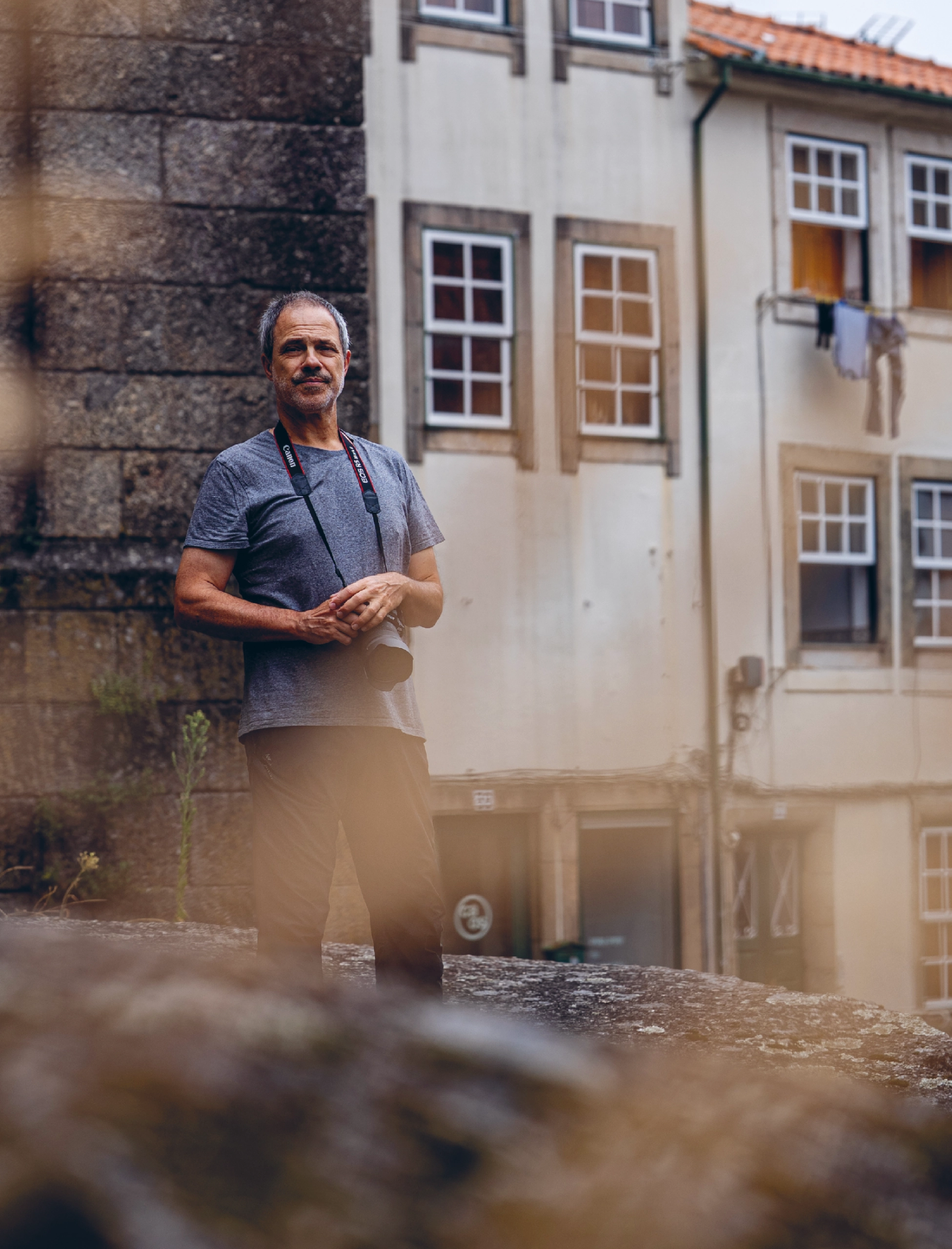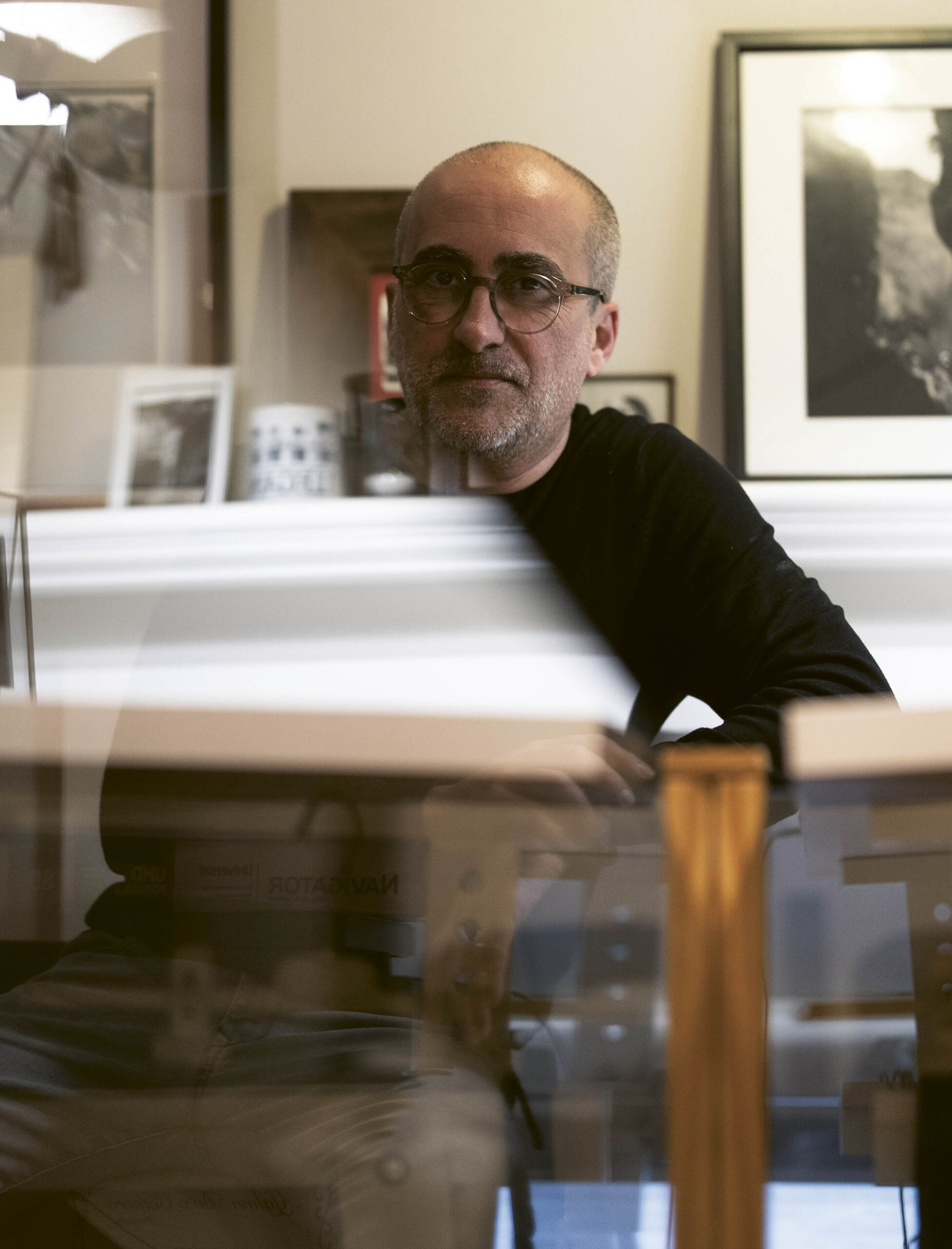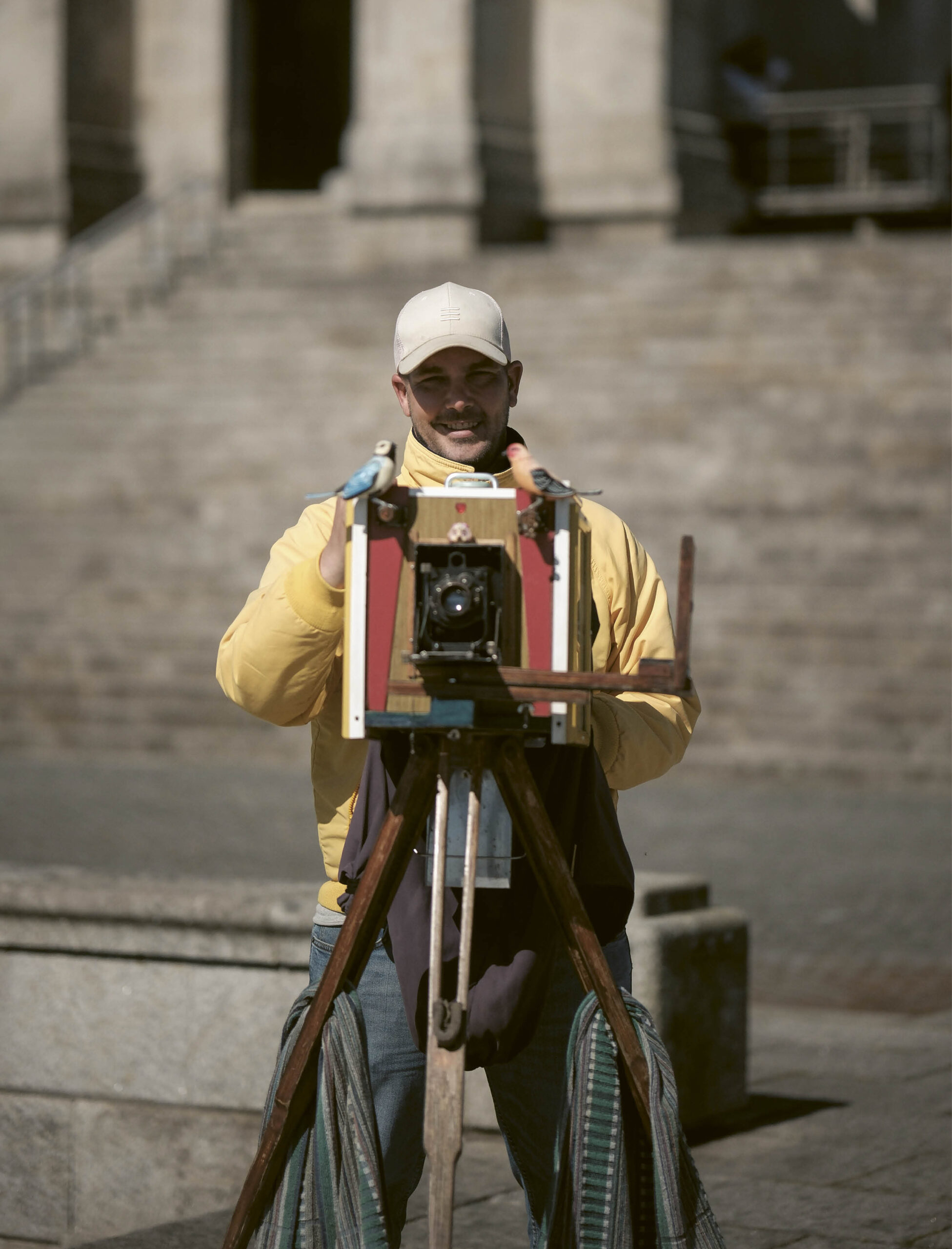

António Martins Teixeira
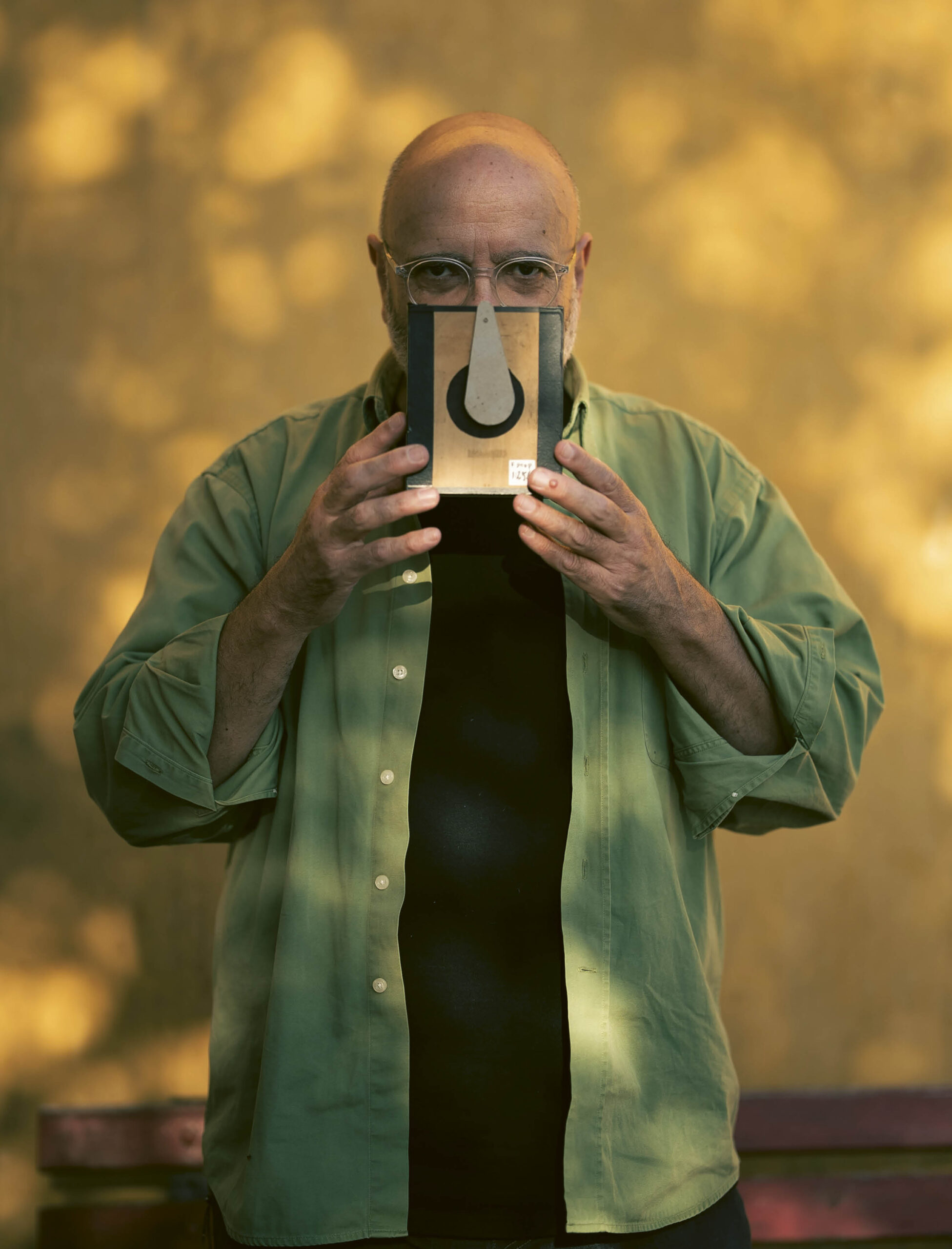
Quando fala de fotografia, António Martins Teixeira começa pelo princípio mais simples: “É a escrita da luz. Se não há luz, não há fotografia.” É uma definição quase elementar, mas também uma forma de regressar à essência de um processo que, ao longo das últimas décadas, se tornou cada vez mais rápido, automático e invisível. O trabalho deste fotógrafo do Porto segue precisamente o caminho inverso: um regresso às origens, à lentidão e à experiência física da imagem.
Nascido em Vila Nova de Gaia em 1962, o seu percurso é o de um pioneiro. Fez parte do 1.º Curso Superior de Fotografia em Portugal, na Cooperativa Árvore (1982-85), numa altura em que a formação na área era uma aventura. Para custear os estudos, mergulhou no laboratório da própria escola, num “mergulho total” que definiu a sua relação com a imagem: feita de trabalho, de química, de tentativa e erro. O ritmo era intenso: aulas, leituras, revelações e experiências ocupavam-lhe praticamente todo o tempo. Foi um período de imersão total. “A única coisa que eu fazia de manhã à noite era ir ao laboratório, às aulas e ler”, recorda. A fotografia começou então a ganhar contornos de um “mundo paralelo”, algo que viria a marcar toda a sua vida.
Ao mesmo tempo, frequentou a Faculdade de Letras da Universidade do Porto, onde se licenciou em Geografia. Esta formação académica viria a influenciar a forma como olha para a fotografia: não apenas como linguagem artística, mas também como ferramenta de observação e compreensão do espaço. Usou ambas, durante quase três décadas. Entre 1986 e 2014, foi professor de Fotografia, contribuindo para a formação de várias gerações de fotógrafos.
Apesar de trabalhar com diferentes técnicas e tecnologias – do analógico ao digital, passando hoje também pela fotografia com telemóvel –, nos últimos anos António Martins Teixeira tem dedicado particular atenção a um dos processos mais primitivos da história da imagem: a fotografia estenopeica, mais conhecida como pinhole.
A lógica da pinhole (buraco de alfinete, em inglês) é simples, e fascinante: em vez de uma lente, utiliza apenas um pequeno orifício – uma estenopeia – por onde entra a luz. Essa luz projeta, no interior da câmara escura, uma imagem invertida do exterior. O princípio ótico é elementar: a luz desloca-se em linha reta. Mas as consequências estéticas são singulares.
Como entra muito pouca luz, as exposições são longas; não existe focagem convencional e a nitidez é difusa; a profundidade de campo parece infinita e as imagens tendem a adquirir um caráter suave, quase onírico. Se a câmara tiver formas pouco convencionais – cilíndricas, esféricas ou improvisadas a partir de objetos do quotidiano – surgem ainda distorções e deformações inesperadas.
Aquilo que para muitos seria uma limitação técnica torna-se, para ele, uma oportunidade criativa. “Em vez de fugir dessas deformações, podemos assumir e até intensificar isso”, explica.
Uma parte essencial desse processo é a construção das próprias câmaras. António Martins Teixeira fabrica frequentemente dispositivos específicos para cada projeto: caixas, recipientes metálicos, estruturas improvisadas que se transformam em instrumentos fotográficos. A primeira pode ter sido uma simples lata de chá, mas o princípio mantém-se: experimentar, construir, testar e observar o resultado.
A imprevisibilidade faz parte do fascínio. Mesmo com décadas de prática, o fotógrafo admite que continua a surpreender-se com aquilo que surge no momento da revelação. “Os resultados com câmaras pinhole têm sempre uma componente de surpresa e imprevisibilidade”, diz. Uma das experiências que mais o marcaram surgiu quando utilizou uma câmara cilíndrica anamórfica para realizar uma série de autorretratos: as imagens resultantes apresentavam deformações inesperadas, criando retratos expressivos e pouco convencionais.
Esse interesse pelas distorções e pelas margens do processo fotográfico tornou-se uma marca do seu trabalho. António Martins Teixeira assume preferir a experimentação à busca de uma perfeição técnica absoluta. “Respeito quem tenta obter resultados muito refinados, mais nítidos ou corretos”, admite, “mas são as abordagens experimentais que mais me interessam.”
Esse olhar também se reflete na forma como observa o trabalho de outros fotógrafos. Desde 2015, participa na organização de exposições, conferências e workshops dedicados à fotografia estenopeica no Mira Forum, no Porto, e acompanha de perto o concurso internacional Mira Pinhole Photography. Entre as centenas de imagens que vê todos os anos, são sobretudo aquelas que exploram os limites do processo que lhe despertam maior interesse, as que assumem as aberrações, as distorções e as imperfeições próprias desta técnica.
Mais do que um estilo, trata-se quase de uma atitude. Para António Martins Teixeira, trabalhar com pinhole implica aceitar o tempo longo, a experimentação e o erro como parte do processo. É também esse o conselho que daria a quem queira começar hoje. Num mundo saturado de imagens instantâneas e tecnicamente perfeitas, a fotografia estenopeica pode ser uma forma de desacelerar. “Talvez apreciar o tempo longo”, sugere. “Esquecer a pressa e os resultados. Avançar devagar e saborear cada conquista.”
Essa atitude pode parecer anacrónica numa era dominada por sensores digitais, algoritmos e inteligência artificial. No entanto os princípios fundamentais da fotografia continuam a ser os mesmos: luz, sensibilidade, abertura e tempo de exposição são as quatro variáveis que estruturam qualquer imagem e que estão presentes tanto numa câmara pinhole como num smartphone. O digital é apenas outra ferramenta – “muito analógica”, como gosta de dizer – porque continua a obedecer às mesmas leis físicas que regem a fotografia desde o início. O que realmente lhe interessa está noutro lugar: no território da experiência, da curiosidade e da pergunta que antecede cada tentativa. “Se eu fizer isto, o que é que acontece?” É nessa pergunta – simples, quase infantil – que continua a residir a essência do seu trabalho.
Primitivo António Martins Teixeira