
Duarte Belo
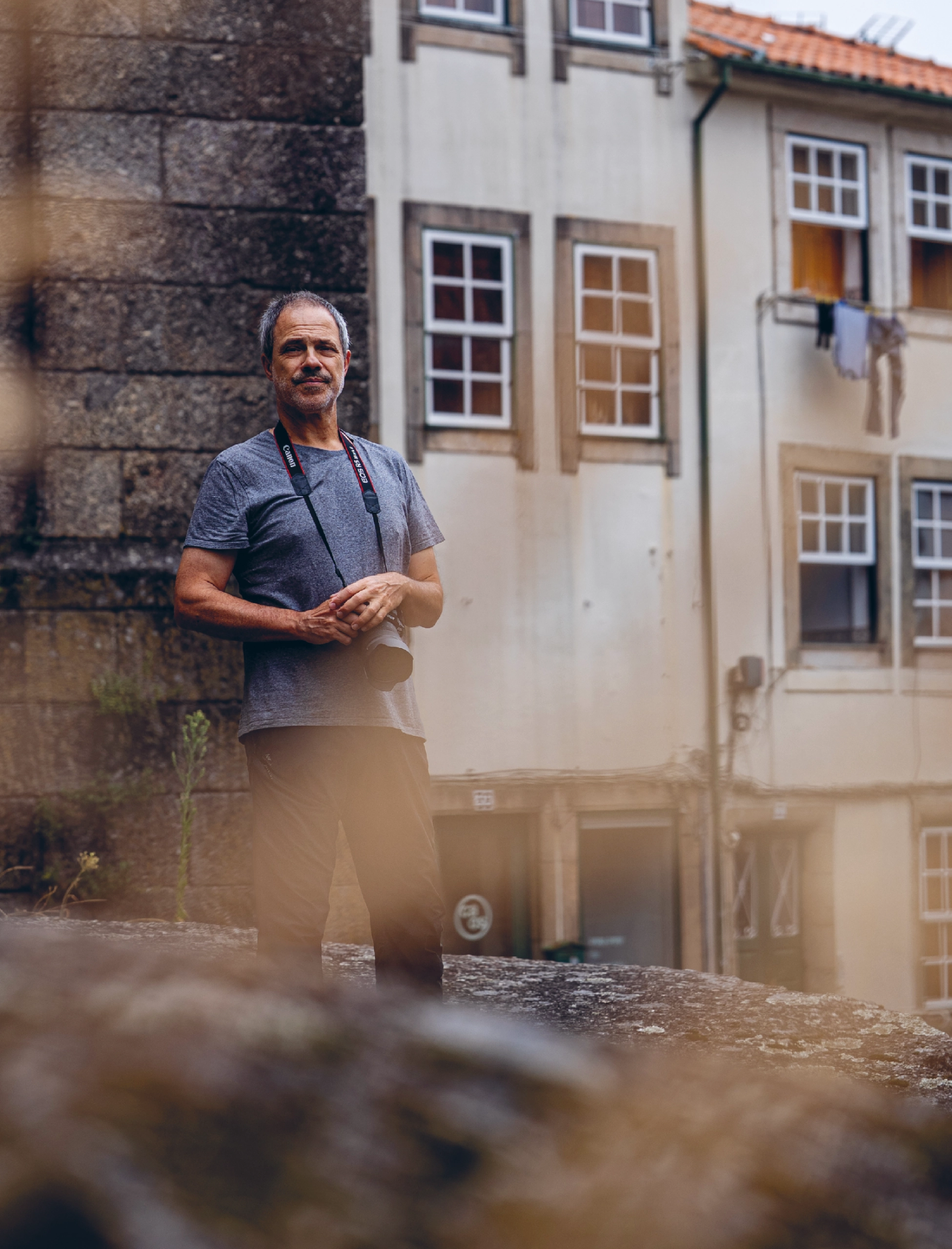
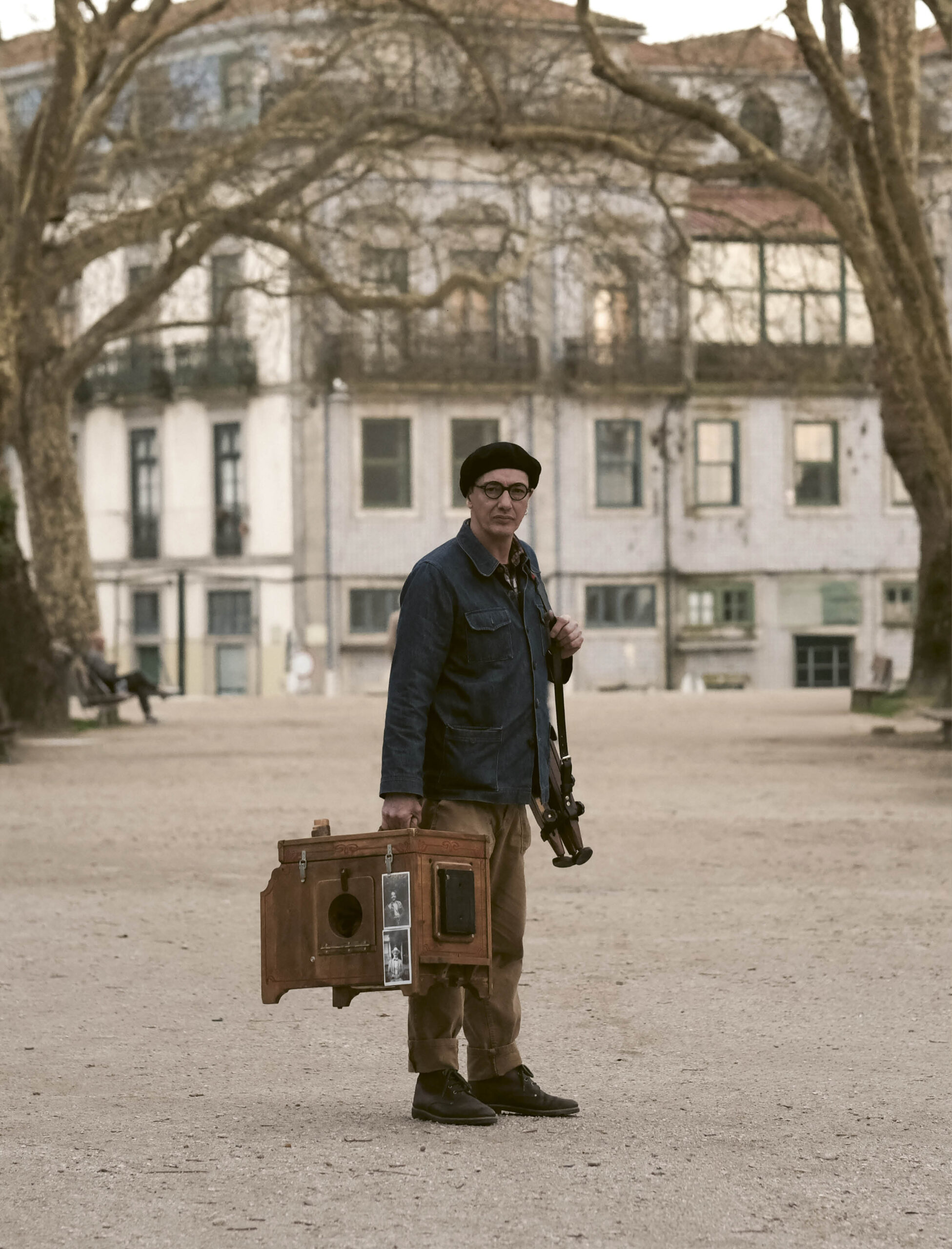
Duarte Belo caminha para compreender. Há quatro décadas que anda a caminhar de câmara fotográfica em punho por um país que nos tem mostrado ser interminável, labiríntico, diverso – grande, afinal. Começou em 1982, com 14 anos de idade, em Vila do Conde. Estava de férias no Natal. Usou uma máquina da mãe, uma Voigtländer Vito, fotografou a praia da Senhora da Guia, e desde aí nunca mais parou. Ao princípio, utilizava um rolo por ano, mais ou menos. Depois foi fotografando cada vez mais, até chegar amilhares de fotografias por dia. Em 2022, foram mais de 220 mil.
“Fotografei todas as cidades do continente, 146, ao todo. Em cada cidade, faço 500 ou 600 fotografias, às vezes mais. O que faço é um arquivo visual. Caminho, paro, fotografo.”
O que o faz parar? “Não sei se procuro o belo. Acho que não. Muitas vezes é só fotografar aquilo que se impõe. Já fiz um guia de lugares a não visitar, no início dos anos 2000. Voltei lá depois e já nada me pareceu feio. A questão do belo deixou de me interessar. Há soluções muito engenhosas em sítios ‘feios’”, conclui.
Tem milhares de quilómetros nas pernas, há viagens de automóvel de que perdeu a conta (mas de que não perdeu os recibos degasolina). Tornou a Renault 4L – o primeiro carro com que, nos anos 80, começou a percorrer Portugal de norte a sul – uma referência, uma memória, uma eleição. As fontes do seu trabalho não são apenas livros – são um pão, uma oliveira milenar, uma pedra, a água do rio. Tudo são referências.
A perspectiva é sempre, ou quase sempre, tentar perceber, ler os espaços, os sítios, os lugares, através da fotografia. Não apaga imagens: “Só quando, no momento em que fotografo, detecto um disparo em falso, uma sobreposição.” Depois disso, guarda tudo.
“Persigo formas de capturar o espaço e transmitir essa experiência de análise e interpretação em experiência visual”, explica, com a mesma clareza e precisão com que organiza o arquivo, a mente, a própria vida. “Sempre senti necessidade de organizar. Talvez venha da minha formação em Arquitetura e da passagem por uma empresa de engenharia, onde aprendi metodologias de registo muito rigorosas”, diz.
Cada trabalho tem um número, está integrado numa cronologia e associado a um conjunto de imagens. Tem tudo sistematizado: listas com os trabalhos mais relevantes, ou significativos, do seu percurso, fichas técnicas com títulos, datas, locais, listas de palestras, exposições, livros. Há mesmo uma cronologia anual do que foi fazendo desde 1982. Este sistema é tanto um método de trabalho como uma forma de pensamento, que se estende da prática artística ao quotidiano.
Seguiu sempre o mesmo processo, o método que começou no sistema analógico e levou consigo para o digital: mantém um arquivo com negativos a preto e branco, diapositivos a cores, milhares de provas de contacto digitais. Seleciona, arquiva, classifica.
Duarte Belo fotografa sobretudo o território português. “É uma decisão consciente. Falo a língua, entendo os ritmos”, explica. E raramente fotografa pessoas. Também é uma decisão assumida: diz que, quando há pessoas numa imagem, elas desviam a leitura de todas as outras camadas. “Não quero fazer um trabalho antropocêntrico. A paisagem está já profundamente humanizada, mesmo quando nela não há gente. As marcas estão lá: no solo, nos muros, nas ruínas, nos caminhos. As pessoas estão presentes mesmo quando ausentes. E isso basta.”
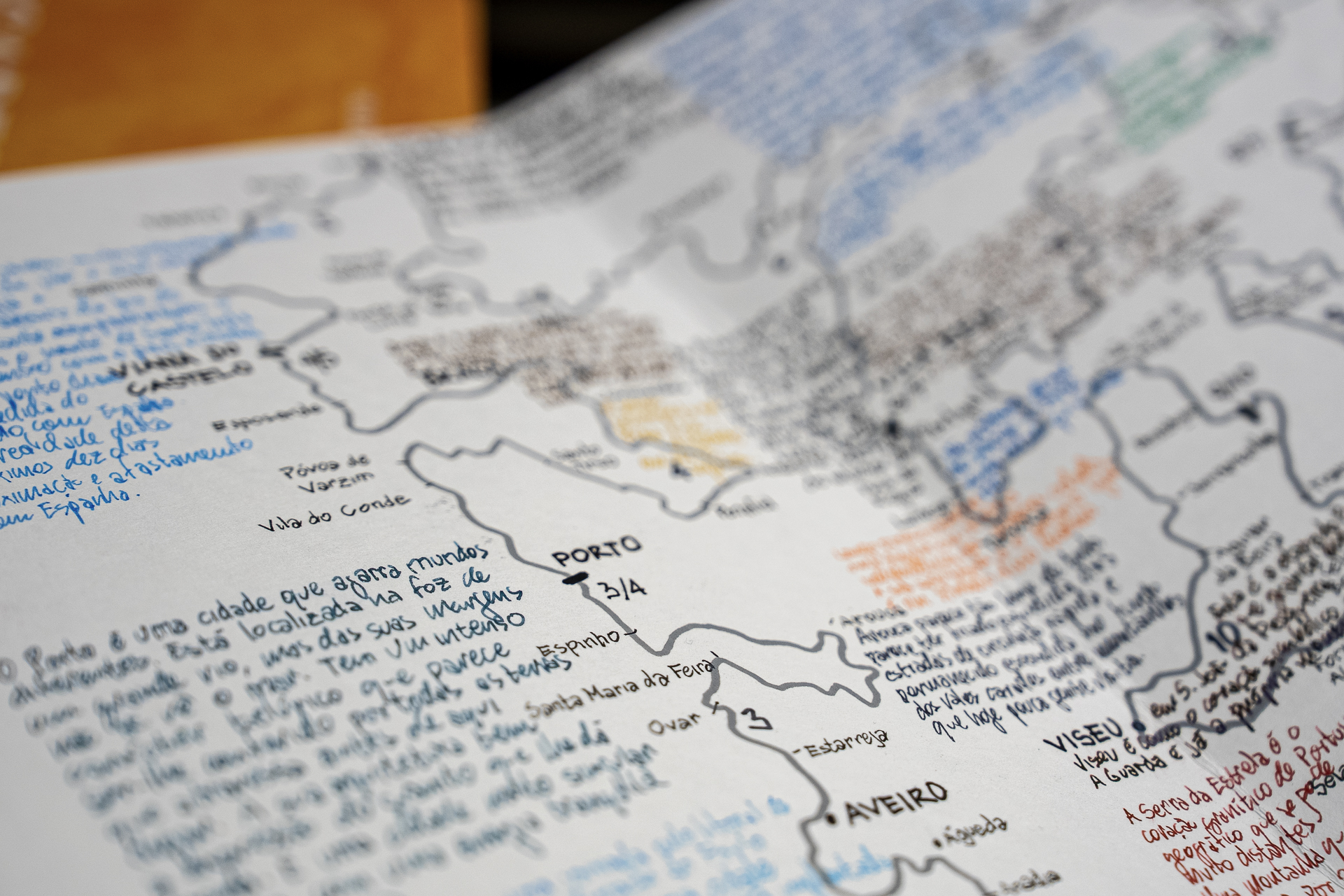
Outro eixo importante do seu trabalho são os mapas. Tem mapas com a marcação de todos os sítios que fotografou, outros feitos para projetos cinematográficos, ou para planear viagens. Tudo isto o ajuda a pensar o território.
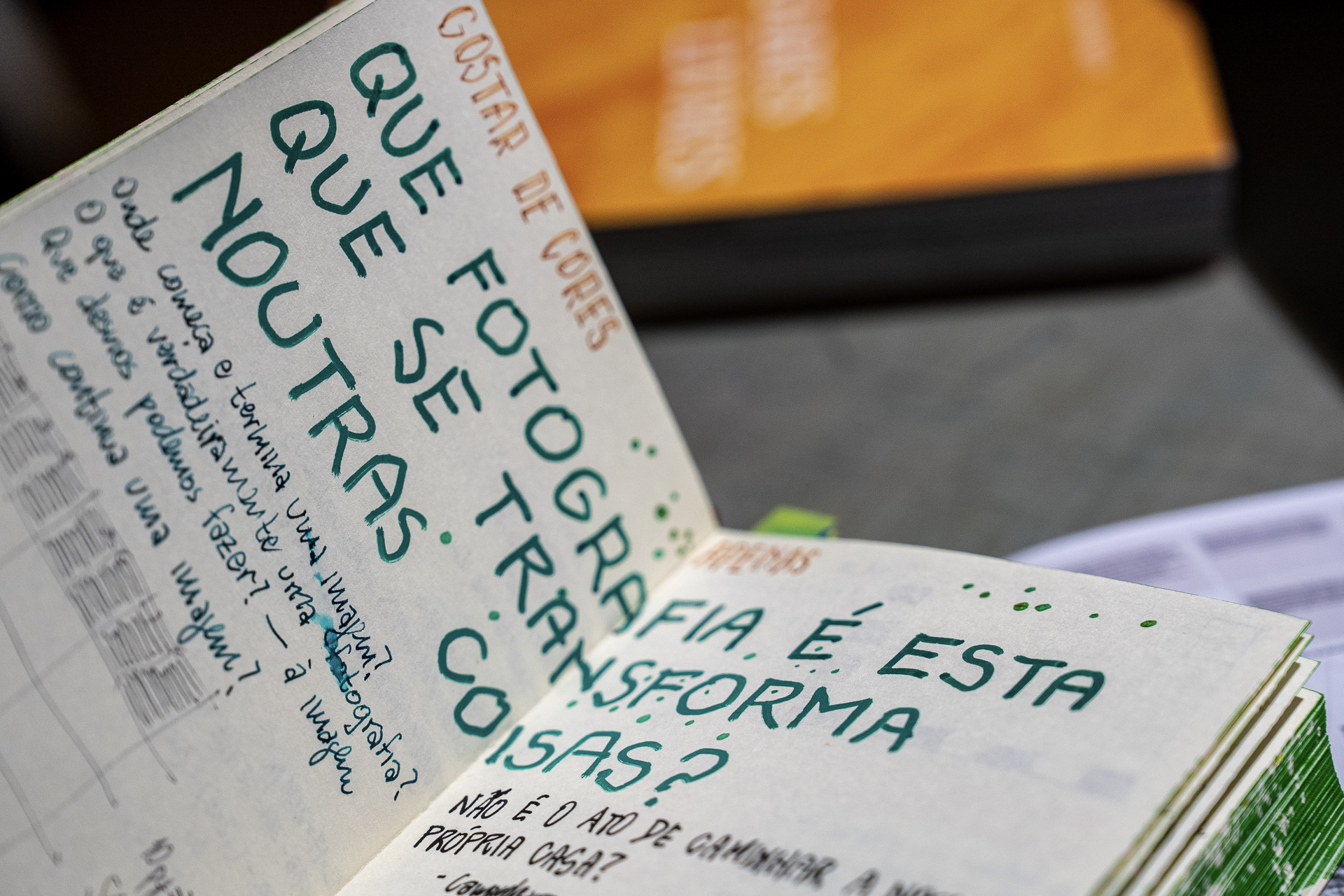
Tem 58 cadernos (todos digitalizados!) que são, porventura, dos objetos mais belos que já produziu. Faz desenhos, esquemas, anotações. Usa a escrita à mão como ferramenta de orientação. A cartografia é feita com cartas militares, e regista todas as paragens. O texto nasce das imagens, como forma de continuar o que a fotografia não diz. “E embora escrever me custe mais do que fotografar, fui-me apropriando da escrita por necessidade: para comunicar melhor”, assevera.
Organiza o seu trabalho por projetos, por formas de comunicação. Livros, exposições, palestras. Em nome próprio, em coautoria, com nomes como Álvaro Domingues, Fernando Alves, João Abreu, Rui Lage. Tanto na escrita como na imagem, procura uma forma de rigor e partilha que torne visível o invisível. “As minhas fotografias são, em certa medida, uma tentativa de construir um puzzle do território português”, simplifica.
Está a organizar um espólio que, segreda, gostaria um dia de ver disponível ao público, numa espécie de Museu do Espaço Português. “Um centro interpretativo com documentação, maquetas, exposições, uma biblioteca, residência, oficina. Um lugar para estar, construir e partilhar”. Assim seja.
Primitivo Duarte Belo