Ma’nene: quando cuidar dos mortos é um ato de amor
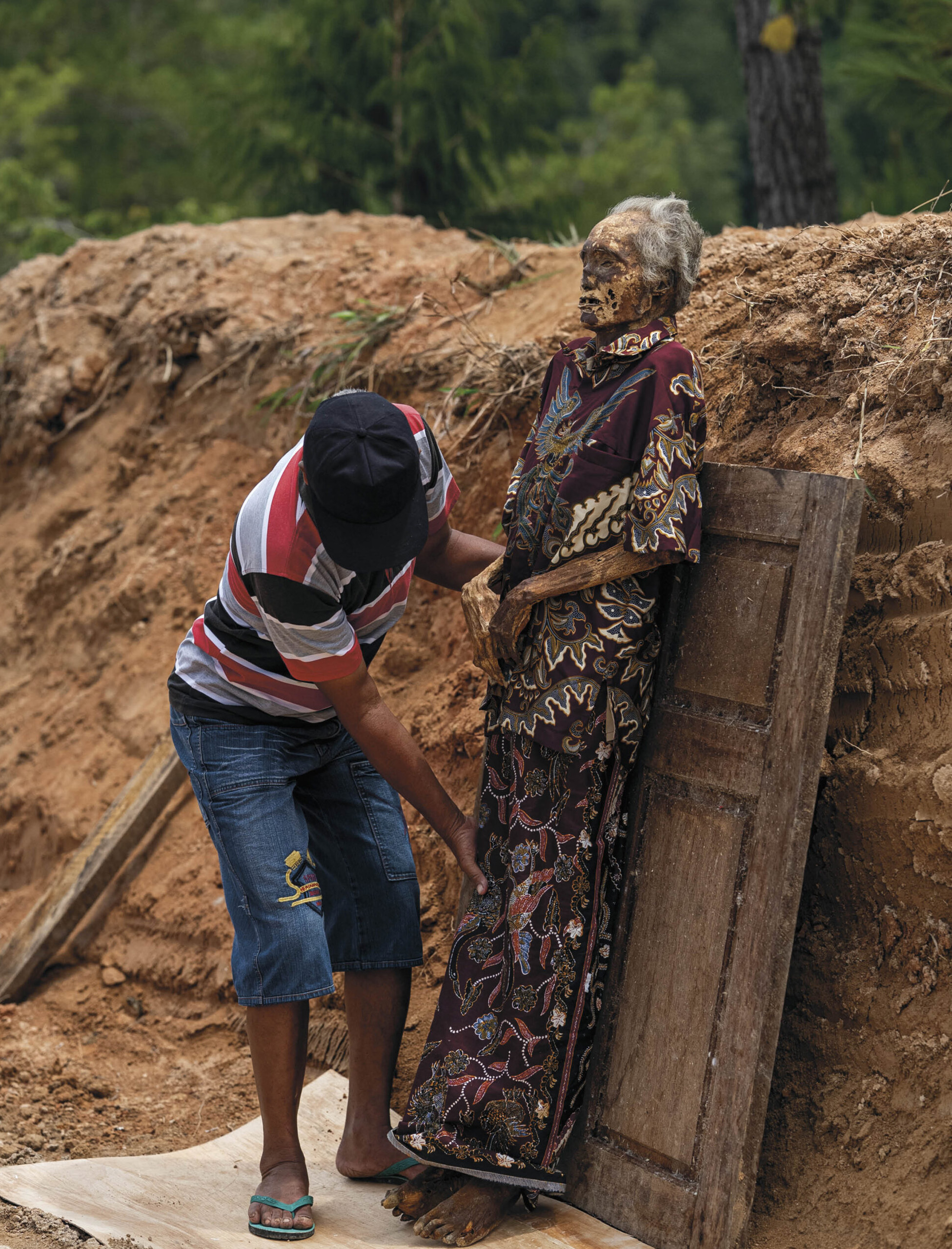
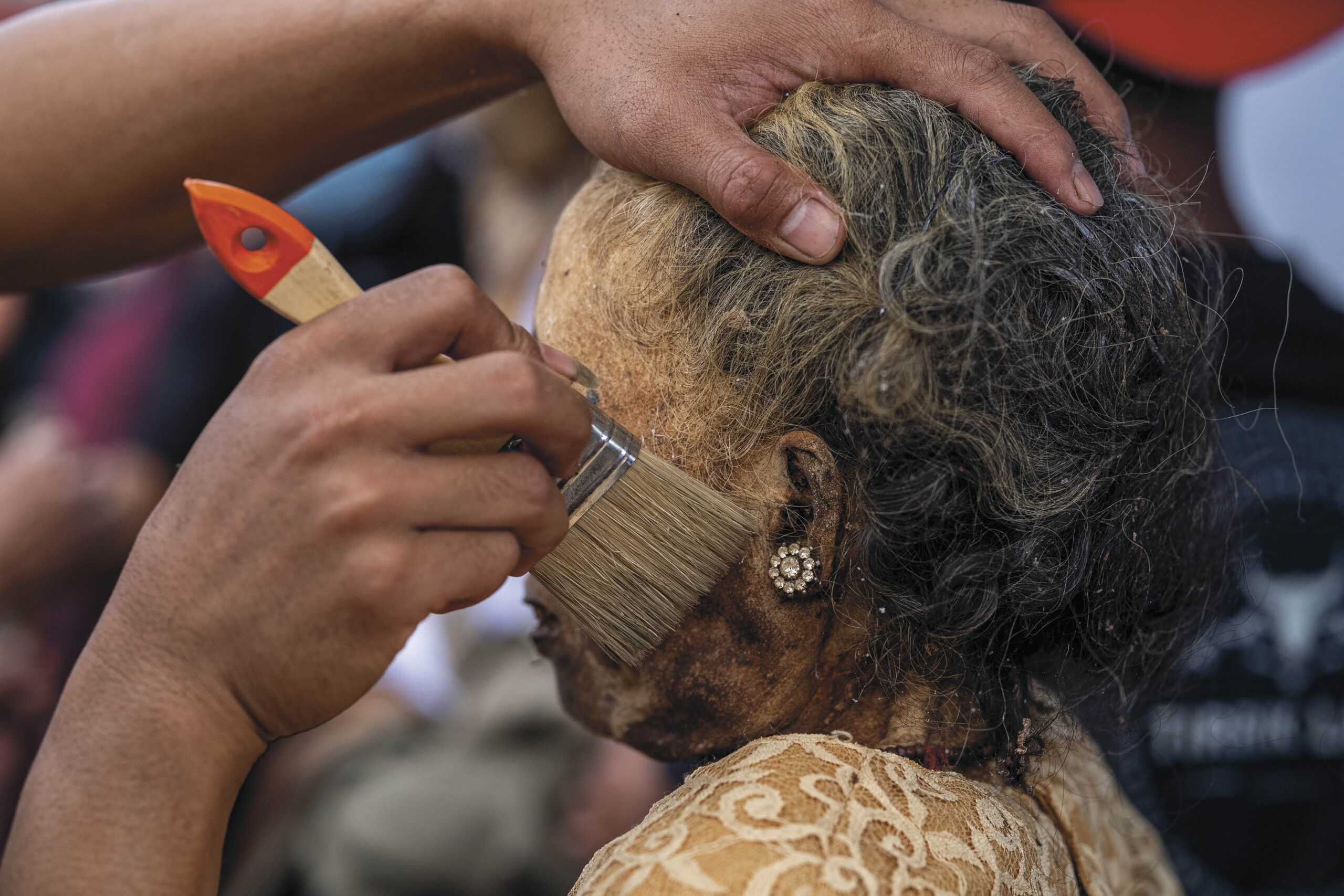
Após a colheita do arroz, era dia de cuidar dos mortos numa pequena aldeia montanhosa em território toraja, tempo de retirar os corpos mumificados dos caixões, limpá-los delicadamente com pincéis e deixá-los a secar ao sol, vesti-los com roupas novas, conversar com eles e voltar a colocá-los confortavelmente nos caixões até ao próximo ma’nene. É uma forma de celebrar os laços familiares e de agradecer o sucesso da colheita.
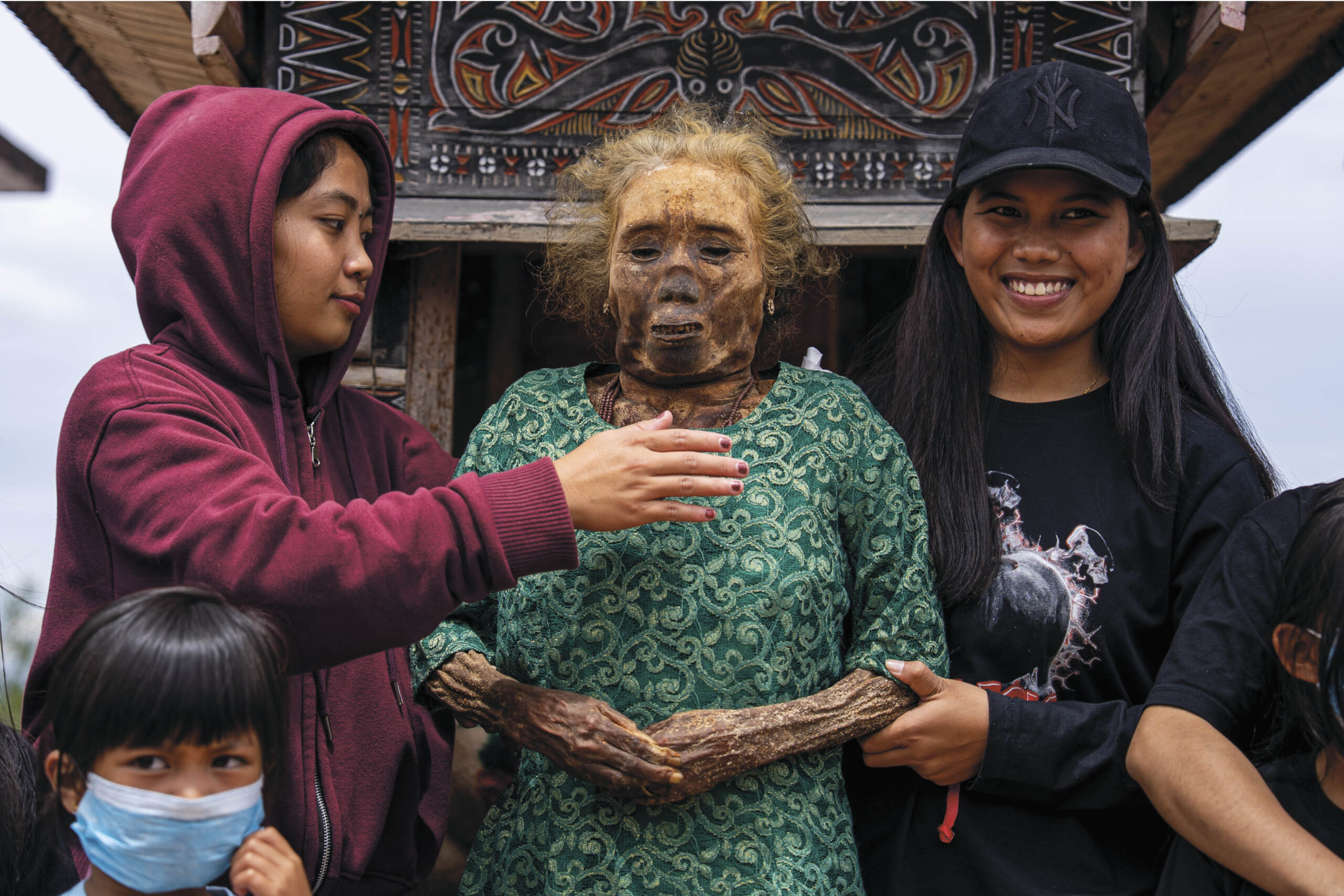
Foi Simon Karaeng quem me recebeu quando cheguei a Batan, uma pequena aldeia na região de Pangala, a noroeste de Rantepao, na ilha indonésia de Sulawesi. Reparei em Destalia, sua filha, com um casaco polar cor de vinho e um sinal no topo do nariz que me chamou a atenção; mas não reparei logo em Merlin, a irmã mais nova de Simon, de longos cabelos lisos e negros, cujo olhar profundo haveria de marcar este dia especial na aldeia de Batan.
Era dia de ma’nene para a família Karaeng e, como mandam as regras de boa educação, entreguei-lhe um pacote de maços de cigarro como oferenda antes de me encaminhar para uma zona da aldeia onde as pessoas se iam juntando perto dos tongkonan – as tradicionais casas torajas. Mas era preciso esperar que chegassem todos os familiares, e, talvez por ser dia de mercado em Pangala, faltava ainda muita gente. É normal toda a família se reunir para ver os falecidos uma vez mais, porventura ajudar a abrir os túmulos, retirar os corpos mumificados dos caixões, limpá-losdelicadamente com pincéis, trocar-lhes as roupas por vestes novas e voltar a colocá-los confortavelmente no caixão dentro do túmulo.
Para os torajas – “o povo das montanhas” –, que resistiram à islamização que se espalhou pelo arquipélago no século XVI e cuja cultura encara a morte não como o fim, mas como uma passagem, o ma’nene (“tratar dos antepassados” ) é um ato de amor e de agradecimento: apreciam o facto de poder voltar a estar fisicamente perto das pessoas que amam, mas já faleceram. É uma espécie de reencontro familiar, digamos assim, com a particularidade de nem todos estarem vivos.
“Ficamos felizes por poder voltar a vê-los, por voltar a cuidar deles. É também uma forma de retribuir e agradecer por tudo o que fizeram por nós enquanto eram vivos, e um prazer podermos continuar a cuidar deles depois de falecerem. E ficamos felizes porque sabemos que eles estão felizes por termos vindo cuidar deles após as colheitas”, explicou-me Meyske, minha anfitriã na aldeia toraja de Labo.
Os rituais do ma’nene só podem acontecer depois de terminada a colheita do arroz, em datas definidas pelos aldeões, normalmente a partir de meados de Agosto. Isto porque, em Toraja, acredita-se que se o fizerem antes das colheitas, o arroz sairá estragado. É comum realizar-se apenas a cada dois ou três anos, mas, ao contrário de outras aldeias, em Batan o ritual do ma’nene é feito anualmente.
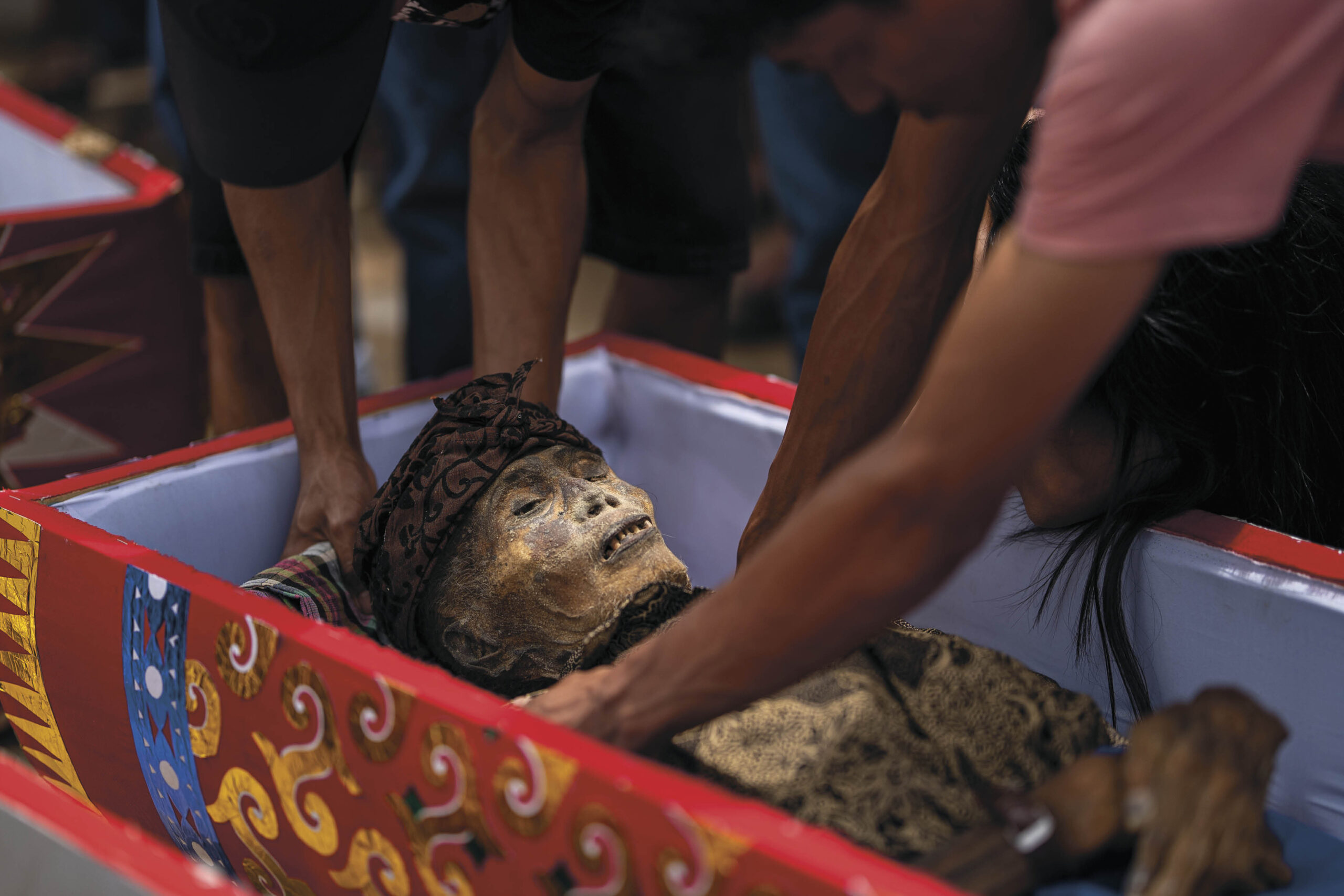
Talvez por isso, a perda do pai, Yohanis, esteja tão presente nos olhos humedecidos de Merlin. Morreu de morte natural em Fevereiro de 2024 e, por opção da família, não ficou muito tempo em casa. Na cultura toraja, quando alguém morre, é consideradoapenas “doente” até que o seu funeral se realize. O seu corpo é mumificado e mantido em casa durante vários anos – às vezes décadas –, até que todos os familiares se despeçam dele e a família tenha disponibilidade financeira para organizar um funeral condigno. Até lá, e estando os mortos apenas “doentes” eles continuam a fazer parte do quotidiano da casa – os familiares falam com eles normalmente, dão-lhes comida e cigarros, talcomo se continuassem presentes no mundo dos vivos. Aos olhos dos torajas, só no último dia do funeral morrem efetivamente.
Os funerais, que podem durar cinco dias, são outro dos momentos marcantes da cultura toraja. Eles acreditam que o destino do espírito depende da dedicação e do amor da família, pelo que o empenho da família nos funerais é levado ao extremo. As cerimónias fúnebres mobilizam aldeias inteiras, com sacrifícios de búfalos e de porcos, danças, cânticos e a presença de familiares vindos de muito longe. Mais do que despedidas, os funerais são encontros comunitários e demonstrações de solidariedade e prestígio.
Mas as expectativas sobre os funerais podem ser um fardo para os vivos. Um búfalo pode custar muitos milhares de euros (especialmente os albinos, suprassumo do prestígio e estatuto social) e, num funeral abastado, pode-se sacrificar mais de 24 búfalos – o número mágico a partir do qual a família tem direito a mandar fazer um tau-tau, as efígies de madeira em tamanho quase real que representam os falecidos e refletem o seu estatuto e que, colocadas em lugares de destaque, tais como grutas ou escarpas, servem para abrigar os seus espíritos e atuar como protetores dos vivos. Ainda assim, o funeral não é o fim de tudo nas montanhas de Toraja, muito por causa do ma’nene. No caso de Yohanis Karaeng, 18 meses depois do funeral, era tempo de Simon e sua família o voltarem a encontrar.
A Antó, cunhado de Simon, vestido com uma camisola de manga curta preta com a inscrição “Rest in love Yohanis Karaeng”, coube a missão de abrir a porta do túmulo da família instalado junto a uma dezena de outros túmulos no topo de uma colina com vista para os arrozais. Fê-lo com a normalidade das atividades habituais, de erva na boca, impávido e sereno – no fundo, com a mesma normalidade com que os seus familiares tinham antes queimado os pelos de um cão com um maçarico e esquartejaram a sua carne em pequenos pedaços para o almoço dos presentes.
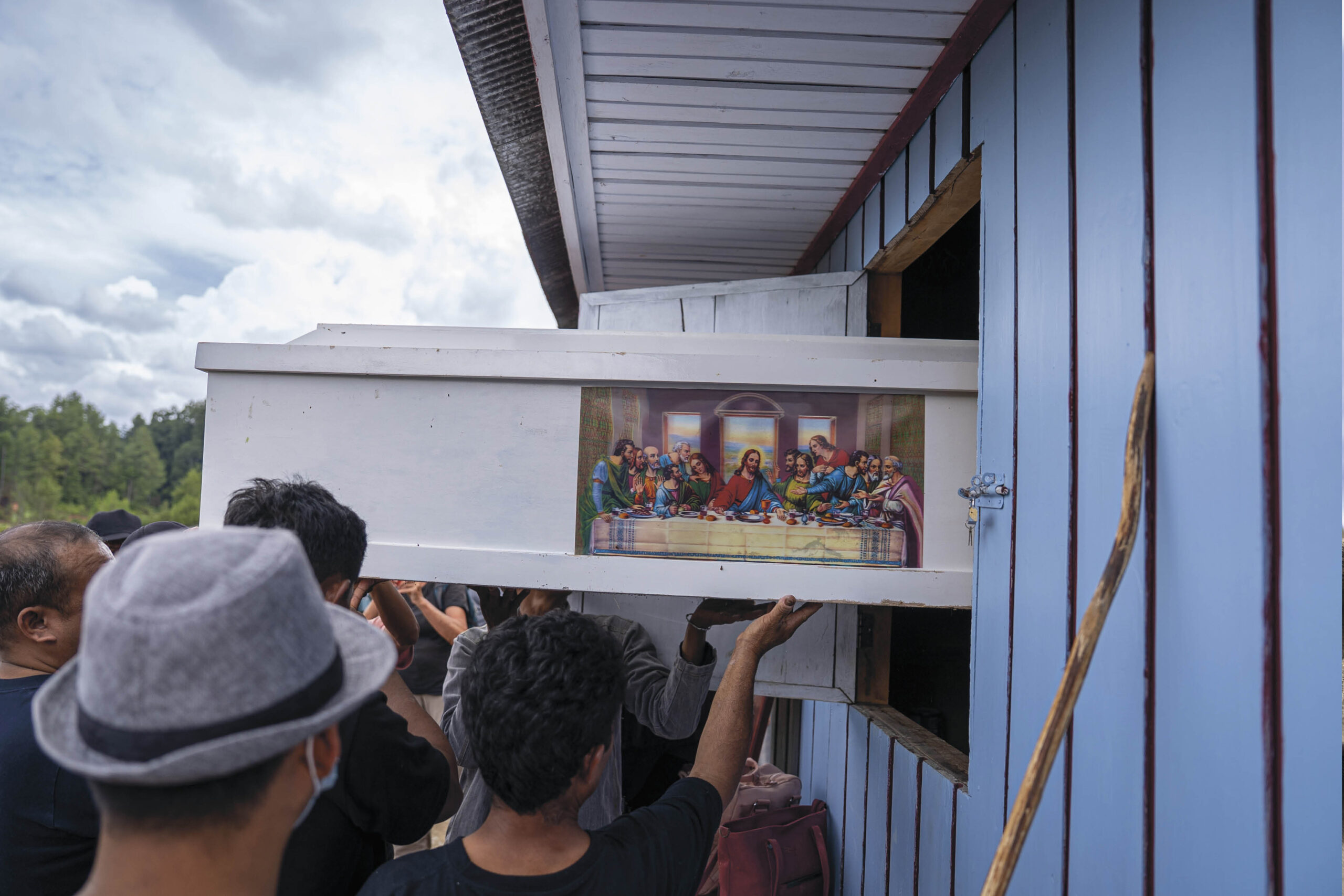
Os caixões foram então colocados no chão, no espaço cimentado em frente ao túmulo da família, pelo que era hora de os abrir e retirar os corpos dos falecidos. Não só de Yohanis, mas também de Ratte Limbong, a mãe de Simon, e ainda de Tangdiasik, o avô, e de Nonie Karaeng, a sexta de 13 irmãos de Simon, que morreu em Kalimantan, em 2023, mas cujo corpo foi levado para Toraja,como manda a tradição. Porque um habitante de Toraja, mesmo que saia em busca de uma vida melhor noutras paragens, volta sempre a Toraja. Nem que seja depois de morto.
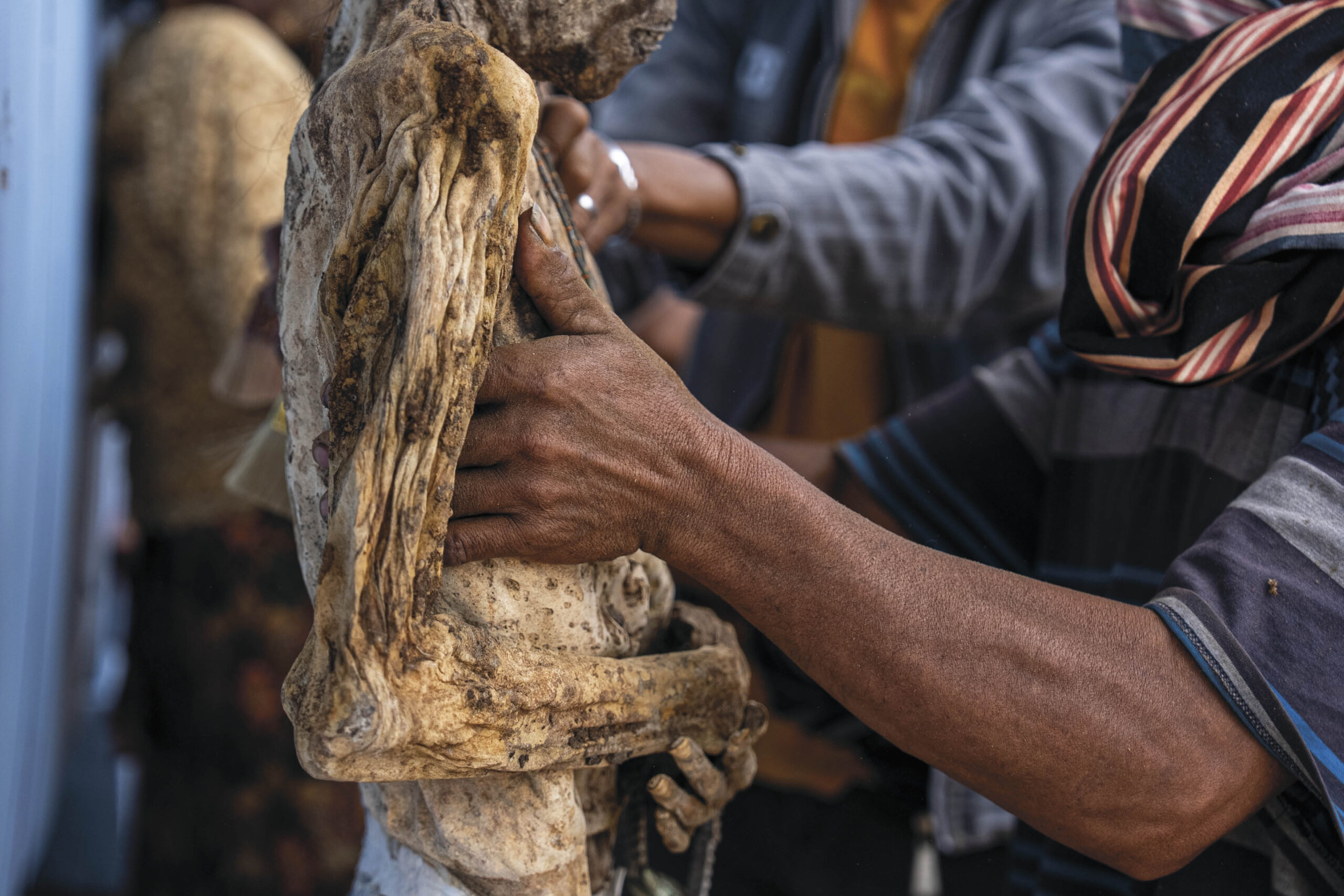
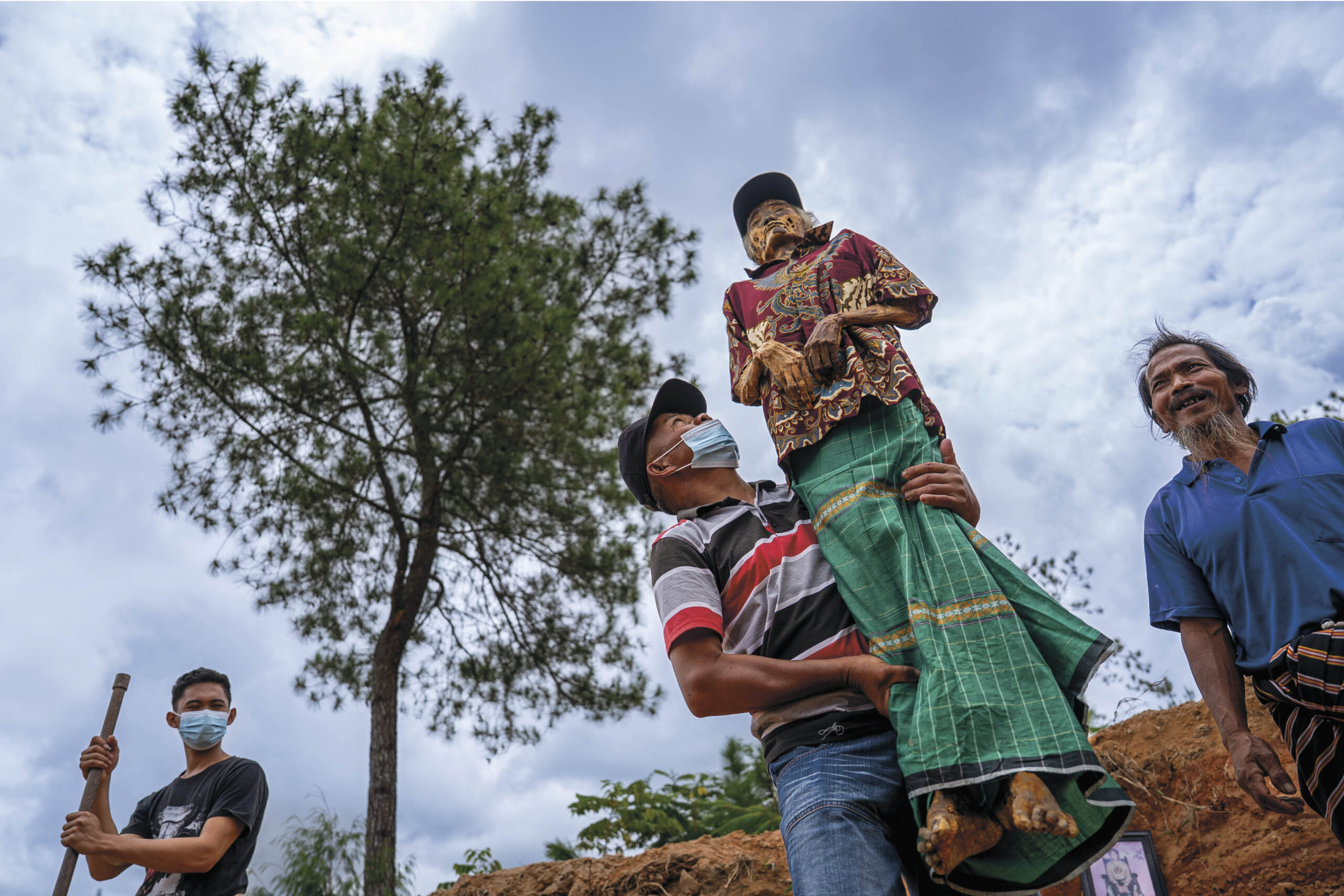
Uma vez abertos os caixões, os familiares e amigos – alguns oriundos de aldeias vizinhas que foram ajudar no ma’nene –começaram as tarefas de limpeza. Primeiro, com uma vassoura tiraram o grosso da sujidade dos corpos enrijecidos ainda deitados. Depois, levantaram os corpos dos caixões, tiraram-lhes as roupas carcomidas pelo tempo e começaram a limpá-los cuidadosamente com pincéis, dos pés à cabeça. De seguida, os corpos dos falecidos foram colocados a secar ao sol por alguns minutos, antes de serem novamente vestidos com roupas lavadas. Foi o momento ideal para os familiares tirarem fotos com os defuntos entes queridos, brincando com eles e elevando-os no ar virados para os arrozais lá em baixo, como que a agradecer a última colheita. “Vês, avô, tanta gente que te veio ver?”, ouvi Destalia dizer ao falecido avô Yohanis, enquanto posava junto dele, apontando para os familiares e alguns turistas que, como eu, presenciavam o ritual.
Não se pode negar que o cuidado com que os de Toraja tratam os seus mortos é tão delicioso e enternecedor como perturbador. Às tantas, reparei num homem, vizinho de Simon, com os pulsos dobrados para dentro e as palmas da mão viradas ao céu fazendo movimentos para baixo pressionando uma almofada lavada posta na extremidade do caixão, certificando-se assim de que aalmofada estava confortável para o falecido Yohanis. Saí de Batancom essa imagem gravada bem fundo na memória. Ocorreu-me que talvez os de Toraja tratem melhor os seus mortos do que as sociedades ocidentais os seus velhos – e esse pensamento é deveras perturbador.
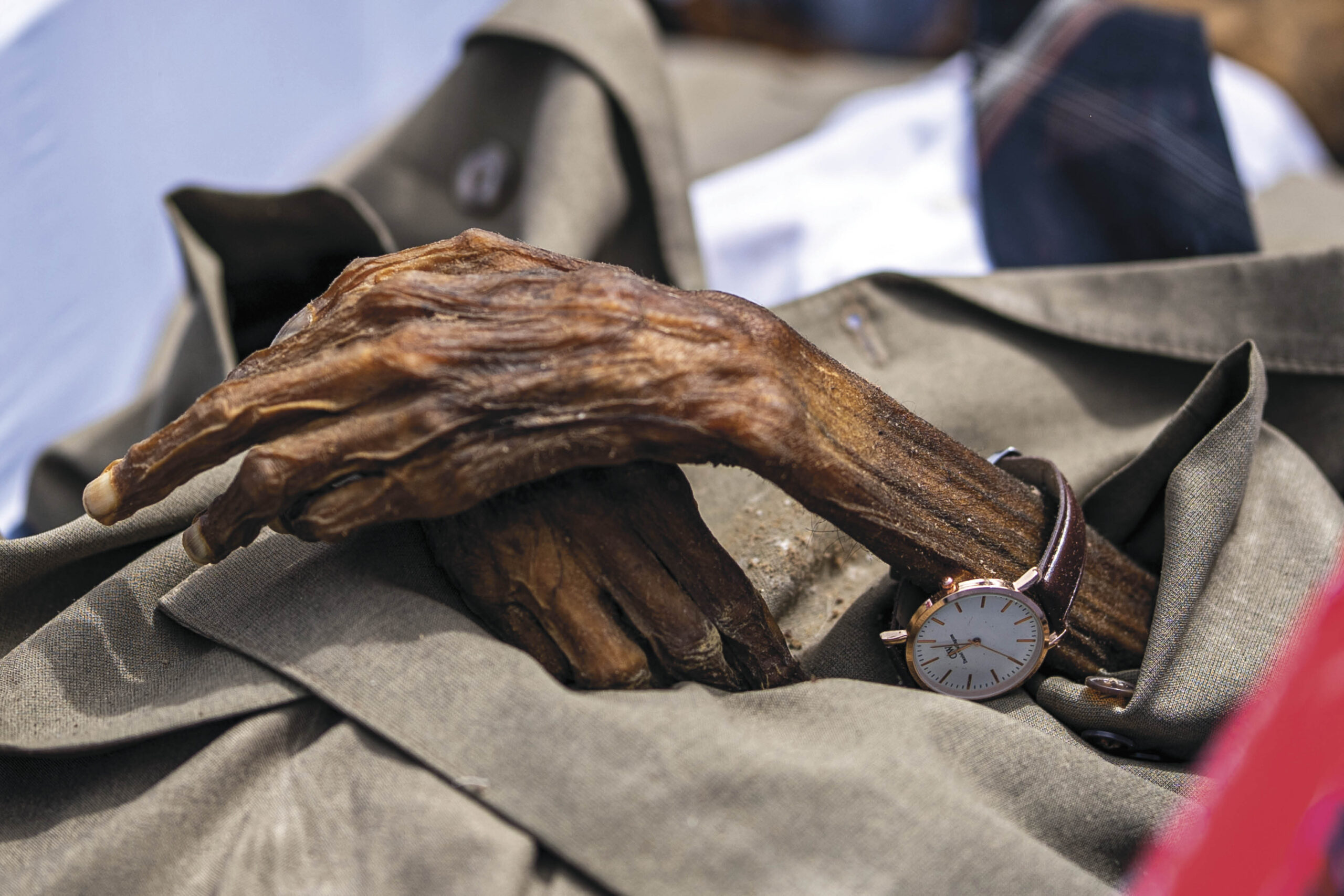
Absorto nessas meditações, não tardou muito até que, depois de tudo muito bem limpo e arranjado, tenha chegado a hora de voltar a colocar os mortos dentro dos caixões. Tempo para ajustar os adereços, incluindo colares, brincos e relógios, colocar os sapatos no canto do caixão, passar uma última vez o pincel pela cara para retirar algum lixo resistente, ajustar as roupas novas, limpar o pó das molduras com fotos dos falecidos e colocá-las junto aos corpos. Tudo com muita alegria, como se fosse, de facto, um prazer estar novamente com os seus familiares – só que mortos. E é.
Só Merlin estava abatida, as escleróticas avermelhadas pelas lágrimas que escorriam pelo rosto fechado, os olhos postos no pai Yohanis de novo deitado no caixão, mais bonito e arranjado com a impecável camisa castanha e dourada que lhe vestiram desta vez. Faltava apenas fechar novamente os caixões e colocá-los nos túmulos para se dar por encerrada a operação de limpeza familiar.
Dias depois, momentos antes de me despedir da anfitriã Meyske, ela perguntou-me o que achava da cultura toraja e de tudo o que tinha visto – os funerais, os cemitérios nas rochas, em grutas e nas árvores (os bebés sem dentes são sepultados no tronco de árvores vivas, como se voltassem ao ventre materno através da natureza e fossem alimentados com a seiva), os mortos que ficam anos em casa, o ritual do ma’nene – como que a avaliar se seria digno da proposta que tinha para me fazer: “Queres ver a minha avó Martha? Ela está cá em casa doente há dois anos…”
Fiquei meio em choque, sem imaginar que ao longo daqueles dias tinha convivido com um morto em casa. “Será uma honra”, respondi. Descemos as escadas, bateu à porta como que a pedir permissão para entrar e, no meio do pequeno quarto, lá estava um caixão coberto por um naperon que Meyske destapou para que eu pudesse ver a cara da sua avó. Durante o tempo em que ali ficámos junto da falecida, ela contando-me o quanto era próximada sua avó e o quanto ela gostava de receber turistas em sua casa, eu sem saber muito bem o que dizer ou fazer, Meyske não parou de acariciar os cabelos brancos de Martha Manja. “Continuo a gostar de lhe mexer no cabelo, como fazia antes. Sabes, éramos muito próximas e tê-la aqui em casa é uma maneira de me despedir dela de forma mais lenta.” Nunca tinha pensado nisso nessa perspectiva.
No fundo, talvez tenha sido esse tempo para se despedir do pai, aos poucos, lentamente, que faltou a Merlin. Um ano e meio depois da sua morte, talvez ainda esteja a fazer o luto e voltar a vê-lo talvez tenha trazido de novo a tristeza aos seus olhos. Pode ser. Não pude deixar de reparar que, momentos antes de os caixões serem fechados, debruçada sobre o caixão do pai e com amão dela na cara dele, Merlin não conteve as lágrimas e chorou como nenhum outro familiar. Talvez fosse muito próxima do pai, tal como Meyske da avó. E talvez por isso lhe tenha cabido a honra de fechar o jazigo, como se fizesse questão de ser a última a despedir-se do pai, até ao próximo ma’nene. Dentro de um ano, após a colheita do arroz, estarão juntos novamente.