Addam Yekutieli: Quanto tivermos de encarar aquilo em que nos tornámos
Em Israel, o artista Addam Yekutieli (ou Know Hope) é um dissidente. As questões que suscita a sua obra multidisciplinar, que se prendem com noções de fronteiras, apartheid e empatia no contexto Palestina-Israel, forçam a sociedade israelita “a encarar aquilo em que se tornou”.
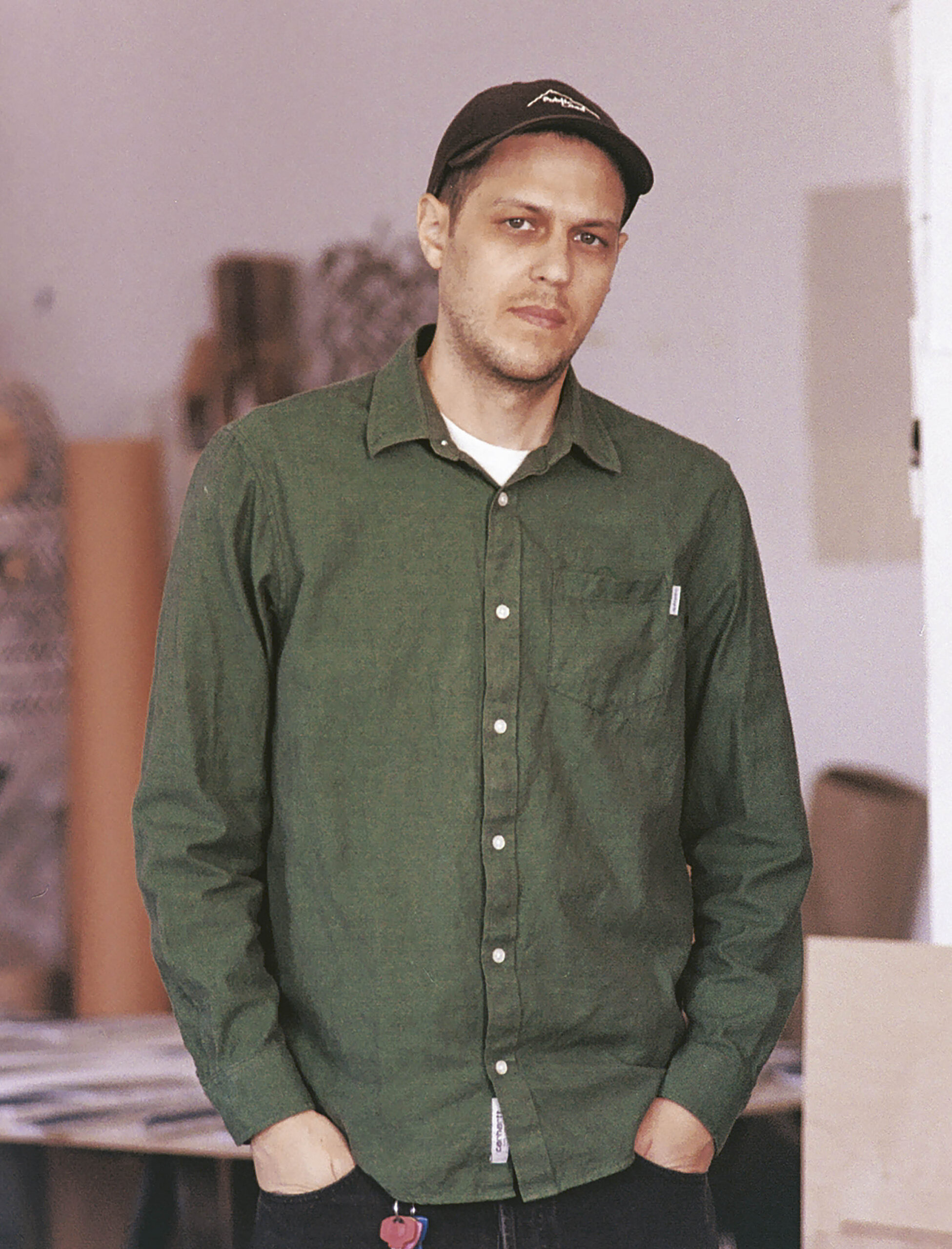
Choviam mísseis iranianos em Telavive no dia em que a Primitiva conversou com Addam Yekutieli, artista israelo-americano também conhecido por Know Hope. “Desde que cheguei ao estúdio, hoje, já fui para o abrigo [antiaéreo] quatro vezes”, conta, a partir da capital israelita na terceira semana do conflito EUA-Israel-Irão, por volta das 17h00. “Durante a noite, aconteceu outras quatro vezes. O cansaço deixa-nos como zombies.” Considera-se um afortunado, apesar do perigo, já que pode recorrer a diferentes abrigos nas imediações. “Nem todos têm as mesmas camadas de proteção”, refere, aludindo a comunidades de palestinianos com cidadania israelita que dispõem, em comparação com o resto do território israelita, de menos abrigos antibomba nas localidades em que residem.
A alusão à realidade palestiniana não surge por mero acaso no primeiro minuto de conversa com o artista multidisciplinar que é, no seio da sociedade israelita, um dissidente; a sua carreira de mais de 20 anos assenta na exploração dos conceitos de fronteira, de opressão sistémica e apartheid, de fragilidade e empatia no contexto do conflito que permeia o território Palestina-Israel há mais de um século. A sua prática artística, centrada sobretudo no uso de texto, funde a arte urbana e a fine art; a mensagem que veicula, poética, filosófica, é sempre ambígua, questionadora, e até mesmo confrontativa. Consiste, invariavelmente, num convite à reflexão – que urge num território em conflito permanente.
Addam Yekutieli (n. 1986) garante que, de há dois anos e meio a esta parte – desde o histórico dia 7 de outubro de 2023 – “a sociedade israelita se tornou mais fundamentalista, mais ultranacionalista-sionista”, e que essa tendência se agudizou com o rebentar da mais recente guerra entre a coligação Israel-EUA e o Irão. “Há, nas ruas de Telavive, painéis com propaganda que mistura conceitos religiosos e nacionalistas, num estranho híbrido.” Nos últimos dois anos e meio, “a sociedade [israelita] entrou em decadência”, observa. “Muitas pessoas que estavam no espectro da esquerda liberal passaram a posicionar-se mais à direita. O grupo de pessoas da esquerda mais radical – e digo radical no bom sentido – tornou-se muito mais pequeno. As manifestações antiguerra, mesmo as mais convencionais, não tinham por base a solidariedade com o povo palestiniano.”
É neste contexto “extremo e violento” que Addam Yekutieli tenta encontrar formas de expressão artística. “Tentar fazer arte na face de um genocídio faz com que tudo pareça trivial, distante da realidade e sem sentido. Por isso, passei a maior parte do tempo a organizar iniciativas de ativismo e a pintar faixas para serem usadas em manifestações, já que era das poucas coisas que podia fazer e que eram minimamente criativas.” Progressivamente, as faixas com mensagens começaram a incorporar-se na sua prática artística. “Comecei a usá-las como meio para criar intervenções em contexto urbano e instalações; passei a interessar-me pelo uso das ferramentas do ativismo com um tom de voz diferente.”
Foi assim que nasceu o seu último projeto, intitulado The Weight of Your Words (“O Peso das Tuas Palavras”). Fruto de colaboração entre Addam e o fotógrafo britânico residente em Jerusalém Jacob Lazarus (n. 1997), o projeto consiste na criação de faixas com mensagens pintadas à mão e no registo fotográfico do momento em que são colocadas em lugares de grande peso simbólico no território da Palestina-Israel. Os textos inscritos nessas faixas, em árabe, hebraico ou inglês, são excertos de conversas que Addam manteve nas redes sociais no pós-7 de outubro de 2023.
“Nos dias que se seguiram, qualquer pessoa que publicasse nas redes sociais uma mensagem que não fosse de apoio ou centrada estritamente no sofrimento judeu israelita era alvo de perseguição”, recorda Yekutieli. “Foram tempos muito voláteis em que fui alvo de muita hostilidade.” Algumas das mensagens que escolheu pintar nas faixas que integram o projeto provêm dessas trocas hostis, mas nem todas. “Algumas são fruto de correspondência com amigos e colegas que tentavam raciocinar sobre o que estava a acontecer. A ideia era pegar nessas conversas, entendendo-as como um produto muito autêntico daquele período, e colocá-las num contexto específico.”
Um dos exemplos mais pungentes de todo o projecto é talvez Two Parallel Realities, fotografada em outubro de 2025 na praia de Charles Clore, em Telavive, com vista para a Faixa de Gaza, que dista meros 65 quilómetros. Na faixa, que é envergada por duas pessoas, lê-se “Duas Realidades Paralelas”, escrito em inglês; na legenda da imagem lê-se que na praia, “apinhada e animada, se ouve ao longe o som dos bombardeamentos em Gaza”. “Acredito que a ligação entre texto e contexto, entre a frase e o sítio onde é colocada, serve para evidenciar diferentes tipos de manifestações, sejam eles de aniquilação, de apartheid, de apagamento histórico ou atual.”
Se Two Parallel Realities se refere a um processo de aniquilação que decorre no presente, A Simple Aknowledgement (“Um Simples Reconhecimento”), fotografada em dezembro de 2024 nas ruínas de uma aldeia palestiniana que foi destruída durante a Nakba, em 1948, recorda o espectador de que esse processo de aniquilação começou há muitas décadas. “A Nakba nunca acabou”, observa Yekutieli. Quando Jacob Lazarus fotografou When We Have to Face What We’ve Become (“Quanto Tivermos de Encarar Aquilo em Que nos Tornámos”), a dupla deixa claro que a Nakba pode ter apenas adotado novas estratégias para atingir os mesmos fins. “À entrada do Porto de Ashdod, o local onde manifestantes israelitas de extrema-direita tentaram impedir a entrada de camiões de ajuda na Faixa de Gaza” é o que descreve a legenda.
O projeto The Weight of Your Words será, no futuro, transformado em livro. “Queremos criar uma espécie de atlas a partir do qual seja possível navegar as diferentes áreas de Palestina-Israel que cobrimos”, explica Yekutieli. “Queremos que o livro seja como um mapa que se abre e que ajuda a compreender a geografia através de todos estes fenómenos.” O projeto está, no entanto, ainda por concluir. “Estamos a cerca de dois terços da sua conclusão. Tínhamos marcadas muitas sessões fotográficas para o final de fevereiro e início de março.”
A guerra pode ter interrompido o processo, mas não os planos para o futuro. “Gostaríamos muito de expor o projeto porque dispomos de materiais que são visualmente ricos e que poderiam ser mostrados numa instalação. Há fotografias e as próprias faixas, que são artefactos das sessões fotográficas; e o livro. Estamos à procura de parceiros para tornar a exposição realidade.”
Filho de pai israelita e mãe nipo-americana, Addam Yekutieli nasceu no estado da Califórnia, nos EUA, em 1986. A mudança para Israel aconteceu quando tinha apenas dez anos. “Sofri um choque cultural enorme”, recorda. “Eu não cresci a visitar Israel – se visitei, não me recordo, seria muito novo. Não tinha qualquer relação com o lugar e durante muitos anos não senti com ele nenhuma ligação. Os meus interesses não eram parecidos com os das outras crianças e isso fez com que me apartasse, deliberadamente, de toda a gente e permanecesse isolado no meu próprio mundo.”
O que fez com que, ao longo dos anos, Addam estabelecesse lentamente uma ligação emocional com Israel, um lugar que continua a considerar “complicado, difícil, pesado”, foi conhecer e desconstruir a sua realidade política. “Eu fui criado de uma forma muito diferente da maioria das pessoas, em Israel”, explica. “O meu pai era um artista que se dedicava a projetos artísticos comunitários e de diálogo multicultural e eu cresci a participar ou a acompanhá-lo enquanto ele desenvolvia esses projetos na Cisjordânia. Eu passava muito tempo na companhia de palestinianos.”
Durante alguns anos, Addam não foi capaz de compreender o significado político ou social dessas incursões para lá da “linha verde”. “Essa consciência não me foi incutida à força e foi surgindo de forma orgânica, natural; tive espaço para desenvolver o meu próprio processo de descoberta. Mas as fundações estavam lá, ainda que de forma mais subconsciente.” Percebia, no entanto, que as suas experiências na companhia do pai não eram comuns a outras crianças. “Quando cresci, percebi que estive lá, que aquelas eram as pessoas com quem cantei e com quem almocei ao longo dos anos. Hoje compreendo quão radical isso era.”
Foi a combinação do seu despertar político e artístico durante a juventude que acabou por ligar, emocionalmente, Addam a Israel. “Embora eu não me identifique como israelita, sou israelita e é essa percepção que os outros têm de mim”, observa. “Por mais difícil e tóxica que seja a minha relação com este lugar, tenho com ele uma ligação, foi aqui que vivi durante os meus anos de formação. Mas sofro com isso todos os dias.”
Ao longo dos anos, o trabalho artístico de Yekutieli foi sofrendo várias metamorfoses. “Inicialmente, comecei a fazer trabalhos com base em texto”, conta. Cedo assumiu o nome artístico de Know Hope (que encerra em si próprio o jogo fonético “No Hope”, abrindo assim espaço a dupla interpretação). Addam inscrevia, então furtivamente, nas paredes de locais públicos frases ou expressões que estabeleciam diálogo com o local e com quem passava.
“Depois disso, em 2005 ou 2006, criei uma iconografia.” Os murais que pintava recorrentemente incluíam figuras humanas esguias, estilizadas, e elementos que se repetiam, formando novos significados de acordo com a sua disposição e interação: pássaros, corações, troncos, bandeiras brancas. “Essa iconografia ficou demasiado associada a mim.” E foi essa que o tornou célebre – talvez até demasiado célebre. “Hoje, ela é quase como um passado que me assombra.”
No presente, tenta o mais possível dissociar-se dessa iconografia. “O meu trabalho é muito diferente agora. Quando se trata de um mural, desagrada-me a interação que se cria entre a obra e o espectador, que se torna muito estruturada e estabelece uma hierarquia clara: ‘Esta é a peça criada pelo artista e tu és o espectador que está a olhar a peça’. Sempre me interessou algo mais enigmático, que pudesse suscitar mais questões.” As palavras, mais do que os símbolos gráficos, cumprem essa função.
Addam ainda pinta murais, mas só quando sente que a causa o justifica. “Pintei há poucos meses um mural dedicado a Awdah Hathaleen, uma figura importante da comunidade palestiniana na Cisjordânia, um ativista. Foi assassinado por um colono israelita. Não houve consequências…”
Londres, 2013. Em espaço público, Addam Yekutieli desenha uma linha branca no chão; em hemisférios opostos escreve “o nosso lado” e “o lado deles”. “Pessoas que nunca se tinham visto, que não se conheciam, passavam pela peça e escolhiam: ‘Este é o meu lado’”, recorda o artista. Progressivamente, foi-se juntando mais gente, cada pessoa escolhia um dos lados. “Subitamente, estavam todos a discutir com quem estava do lado oposto e a tentar convencer outras pessoas a juntar-se ao seu lado. Não havia nada ali: as pessoas estavam simplesmente a projetar, de forma aleatória, os seus valores.”
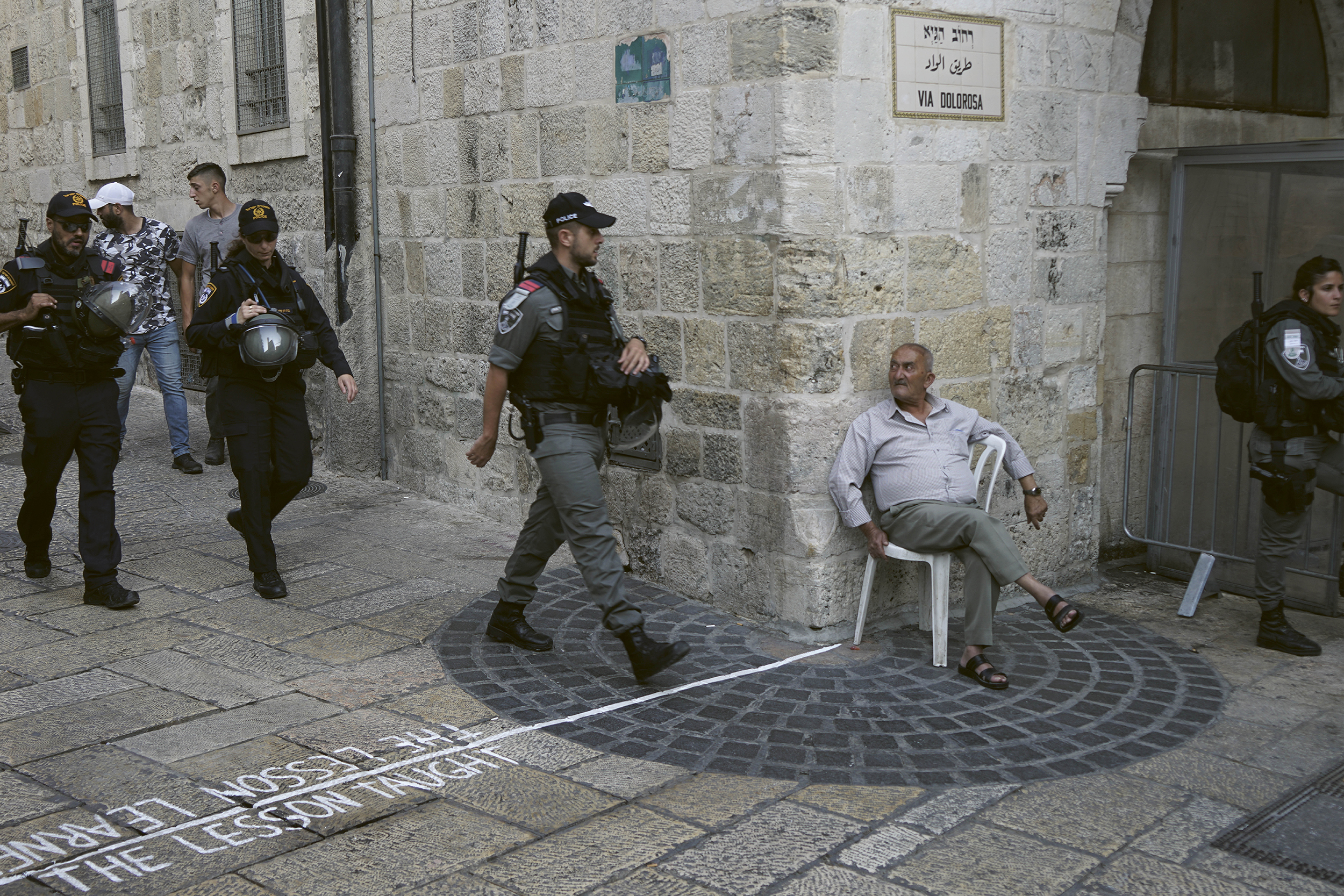
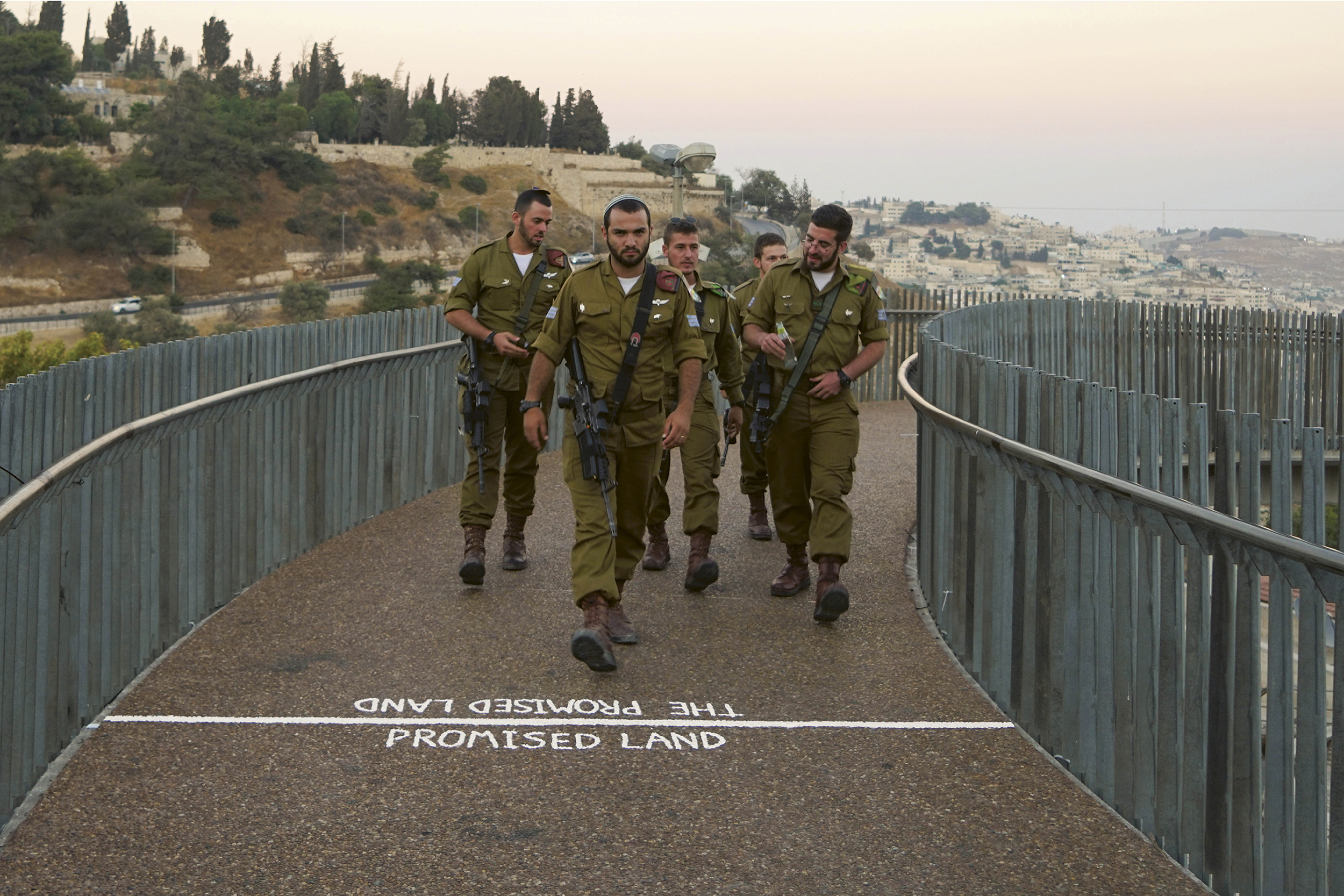
O projeto Taking Sides (“Tomar Partidos”) explora o conceito de território e a noção de tomada de posição a partir da criação de uma linha de fronteira. “Os conceitos de fronteira e território sempre me interessaram porque são muito proeminentes na minha realidade local”, explica. “Cresci a sentir desdém por nações e bandeiras, por isso quis criar uma série que desafiasse esses conceitos. Também tentei mostrar que as fronteiras que existem não são estritamente nacionais; há fronteiras entre nós que são invisíveis e que nos separam de outras pessoas: éticas, morais, económicas, etc.”
Addam planta a fronteira no espaço público – já o fez em Londres, Colónia, Lyon e Jerusalém –, afasta-se e regista a interação do público. “O que acontece depois fica fora do meu controlo e é autêntico.”
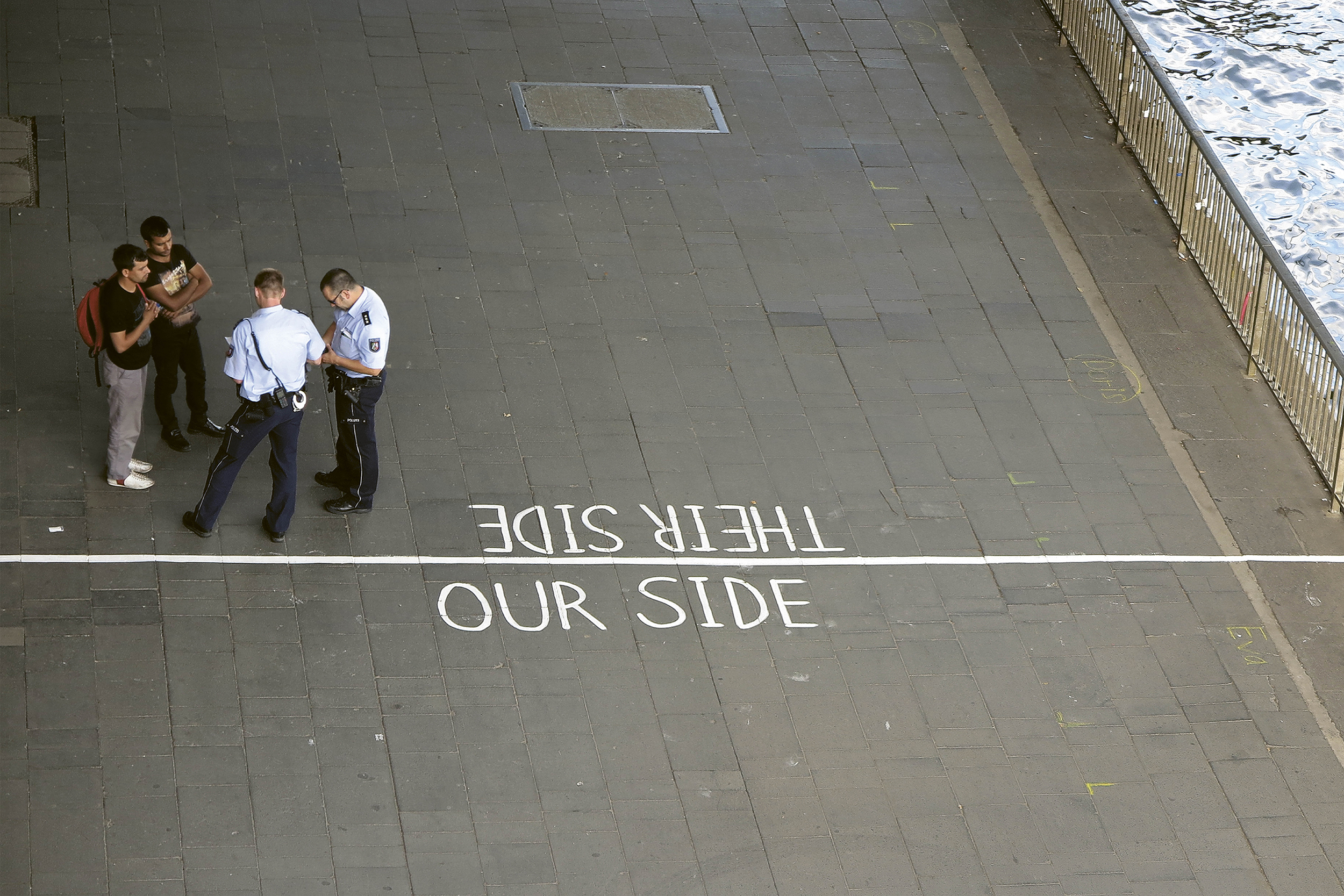
Em 2015, na cidade de Colónia, Yekutieli desenhou no chão o mesmo esquema: “o nosso lado” e “o lado deles”. “Estávamos no pico da chegada de refugiados sírios à Alemanha”, lembra. Na imagem, “duas pessoas de pele mais escura são abordadas por membros das autoridades alemãs, que lhes pedem identificação”. “É por isso que acredito que a arte em espaço público pode ser usada para fazer ressaltar coisas que já existem – e isso é melhor do que ser eu a falar sobre elas. Gosto da ideia de colocar um elemento num lugar que sirva de catalisador para a exposição de uma realidade mais profunda.”
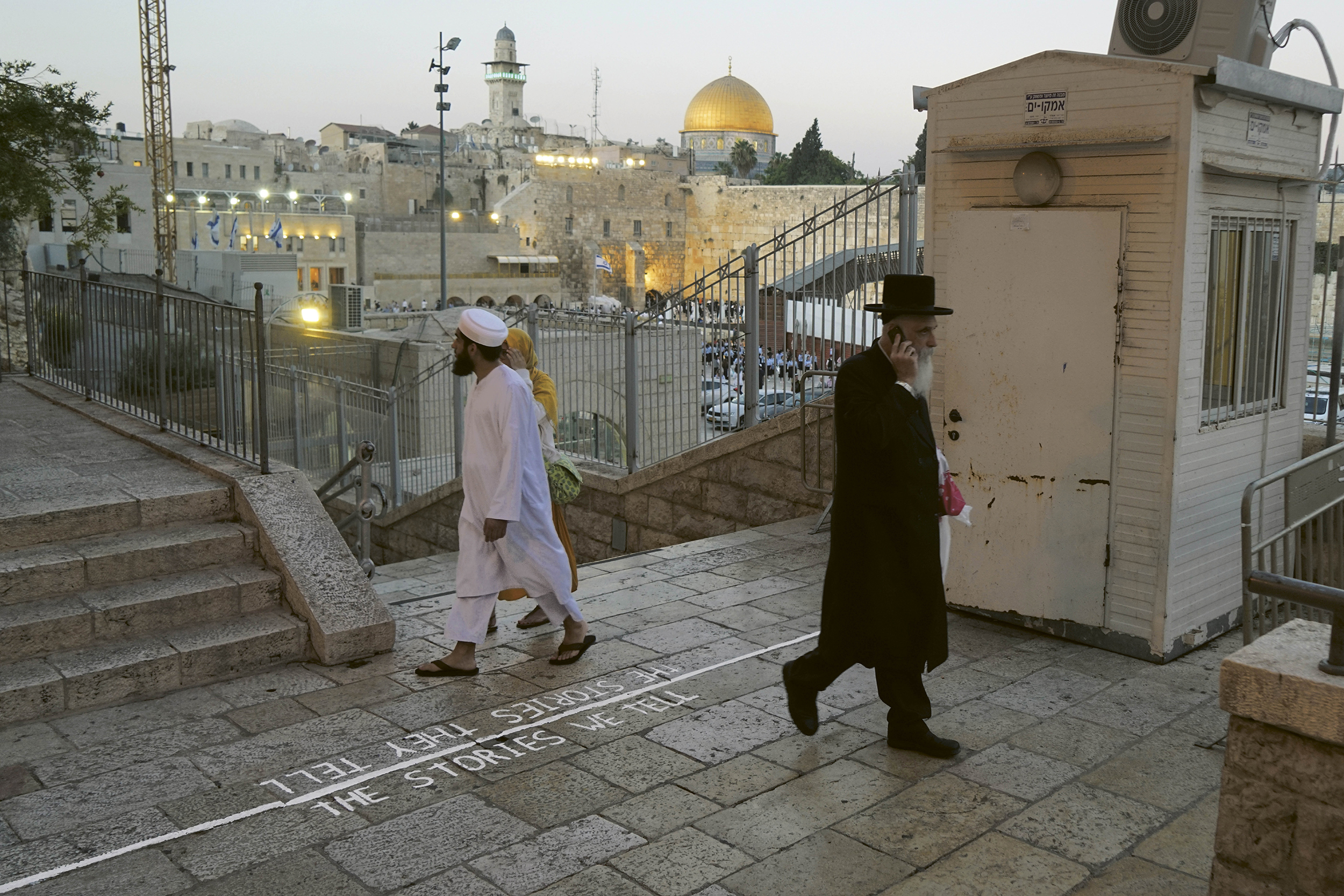
Em 2014, ocorre uma mudança importante no âmago de Addam. Até então, enquanto artista, recorria invariavelmente a símbolos de leitura universal, como “as bandeiras brancas, os muros, as fronteiras”; mas algo mudou: “Senti que era tempo de assumir o local onde vivo, a minha posição. Queria falar ‘da’ bandeira, ‘do’ muro, ‘da’ fronteira. Já não podia dar-me ao luxo de utilizar termos universais, tinha de assumir a responsabilidade de chamar às coisas aquilo que elas são.”
Um reflexo dessa mudança está patente no projeto A Body of Land (“Um Corpo de Terra”), que se debruça sobre as cicatrizes que estão gravadas nos corpos “de pessoas que vivem entre o rio Jordão e o mar Mediterrâneo”. “Quis criar uma analogia entre fronteiras e cicatrizes”, sumariza; quis debruçar-se sobre as “semelhanças entre as duas”, entender como ambas se formam e que relação se mantém com o trauma ou a memória que lhe está associada. Recolheu testemunhos e dispõe, hoje, de um arquivo que inclui cartas manuscritas e fotografias das cicatrizes de mais de 100 pessoas. Numa das formas que o projeto adotou, Addam deu corpo à metáfora e fundiu numa só as fotografias das cicatrizes e as das paisagens fronteiriças.
“O projeto deu às pessoas oportunidade de criarem um manuscrito sobre as suas cicatrizes. Surgiram coisas interessantes. Eu demorei mais de um ano a dar-me conta de que o projeto teve um aspecto terapêutico para mim.” Addam, que sofre de uma doença autoimune que requer, não raramente, que seja submetido a intervenções cirúrgicas, tem no corpo inúmeras cicatrizes. ”Essas fazem-se sentir no meu quotidiano, na forma como me relaciono com o meu meio, no modo como tenho a percepção do sofrimento e sobre como sempre me interessei por dissecar realidades políticas de uma perspetiva emocional ou sentimental.”
As fronteiras, tal como as cicatrizes, existem de uma forma premente no universo de Addam Yekutieli. “Falo todos os dias sobre a possibilidade de abandonar Israel”, confessa. “Tenho a sorte de pertencer a uma comunidade de ativistas com quem partilho a mesma linguagem, com quem posso e quero trabalhar. É uma tábua de salvação.” Conta que sentiria vergonha ou culpa se se fosse embora. “Sentiria culpa por ter o privilégio de ir – porque algumas pessoas não podem sair de onde estão. Por outro lado, a minha família está aqui, este é o lugar onde sinto que tenho um propósito e um contexto – no fim de contas, o meu trabalho é tão local…”
Know Hope sente que vive em contradição. “É difícil ser artista em qualquer parte, mas é ainda mais difícil ser um artista de esquerda em Israel. Todo o dinheiro [estatal], fruto também dos meus impostos, é alocado para a criação de colonatos, para as comunidades ultraortodoxas, antidemocráticas ou nacionalistas. Pertencendo à esquerda radical, torna-se impossível trabalhar dentro do sistema – mas eu também não quereria trabalhar dentro do sistema, de qualquer modo. Isolei-me há muitos anos e sofro as consequências de assumir os meus valores de forma explícita.”