Svalbard: Onde a ligação ao mundo esmorece e a natureza se agiganta
Svalbard é um território onde o silêncio do Ártico se confunde com o mistério. Entre tempestades e luzes que dançam sobre o branco imenso, percebe-se que cada passo exige respeito e cada instante é um privilégio diante da grandiosidade intocada do mundo setentrional.
Existe algo de místico em Svalbard, o território habitado mais setentrional do globo. Ao longo de cinco dias, percorremos cerca de 400 quilómetros de trenó e mota de neve que, arrisco dizer, nunca mais esqueceremos.
Svalbard não se assemelha a mais nenhum outro lugar. As latitudes do arquipélago guardam uma Arca de Noé intocada, permitindo encontros com ursos polares, focas, renas, narvais, belugas, papagaios-do-mar, morsas, baleias-azuis, entre outras espécies. Localizado a cerca de 1.300 quilómetros do Pólo Norte, Svalbard significa “costa fria”. Março é habitualmente o mês mais gelado do ano e, por isso, um dos mais expostos a intempéries.
Quando nos aproximávamos da cidade de Longyearbyen, ainda a sobrevoar o sul do território, constatámos o quão s estávamos de um ambiente prístino. Olhei para quem se sentava na mesma fila do avião, à procura de outros olhares encantados. Era extremamente fácil contagiarmo-nos com a beleza do que víamos – um pano branco enrugado pelas montanhas e escarpas, pousado em águas azul prussianas.
Quando pisámos a pista coberta de neve, sorrimos, como se não fossem precisas palavras para adornar o que sentíamos. Estávamos s do topo do mundo, onde os ursos polares superam o número de habitantes.
Depois de caminharmos por Longyearbyen, é mais fácil compreender como este é um dos sítios mais seguros do mundo, onde não existe crime. Além das regras municipais de segurança e preservação do ambiente, levanta-se uma ordem maior: não perturbar os animais, frisando que somos nós os visitantes e não eles.
Prestes a iniciar uma aventura de tamanho ainda desconhecido, encontrámo-nos com o guia local que nos iria acompanhar na primeira jornada – um percurso de trenó, que duraria cerca de nove horas, até uma gruta de gelo no glaciar Tellbreen.
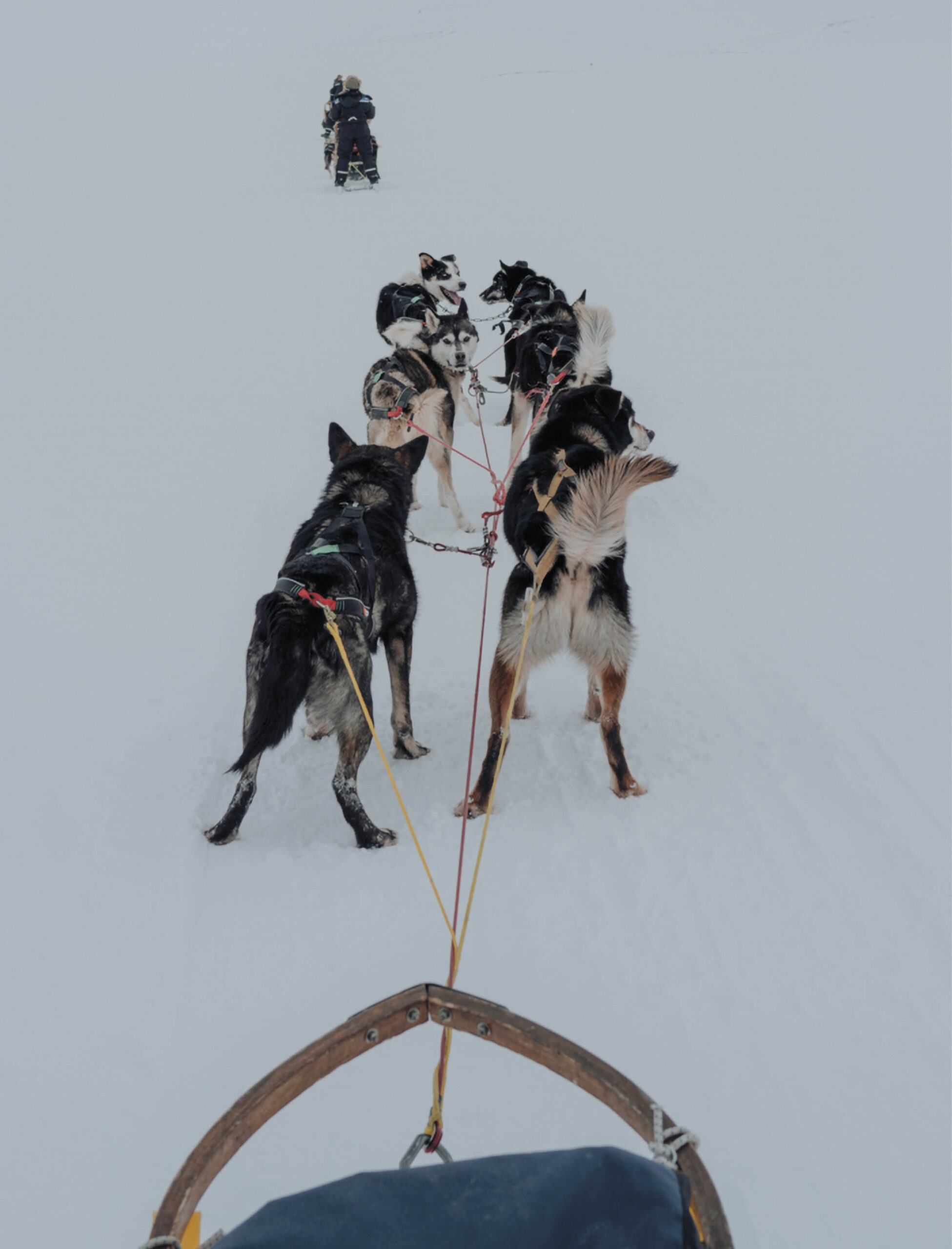
Chegados ao abrigo onde moram os cães, vestimos fatos mais resistentes por cima dos nossos fatos de neve, dois pares de luvas, proteções faciais, gorros, óculos e botas altas. Começámos por nos familiarizar com os cães que nos acompanharam e conhecer esta antiga tradição fundamental para deslocações em Svalbard. Cada um de nós tinha a missão de os levar para a posição correta do trenó e preparar os acessórios que nos permitiriam viajar em segurança, aos pares.
Pouco tempo depois, estávamos fora dos limites da cidade, num inteiro palco branco natural. Era como se, de repente, tivéssemos sido transportados para outro tempo, despojado de estímulos artificiais. A posição linear dos trenós, alinhados uns atrás dos outros, impedia a comunicação com o grupo durante a maior parte do tempo. Depois de algumas horas de caminho, a quase ausência de ruído era próxima de ser perturbante. As outras partes do mundo ficavam suspensas num manto gelado que nos absorvia ali e apenas ali. Um silêncio em que parecia não habitar mais ninguém.
De vez em quando, parávamos para ouvir as dicas do guia ou ajustar algum acessório do trenó. Se dúvidas houvesse a respeito da alegria dos cães em puxar os trenós, caíam sempre aí. Olhavam imediatamente para trás como se nos perguntassem por que motivo tínhamos parado, inclinando-se para a frente, apostos para retomar.
Nesse trajeto, a sensação térmica alcançou os 36 graus negativos. Fechei os olhos e recordei-me de que sessenta por cento do arquipélago é constituído por glaciares e apenas treze por cento tem vegetação. A simples imagem de quem chegou a estas terras pela primeira vez e se deparou com este cenário intacto é majestosa.
Quando chegámos da gruta de gelo, prendemos os trenós numa zona abrigada e alimentámos os cães. Fizemos uma caminhada até uma escada com cordas e degraus de madeira, que nos permitiu subir um monte e chegar à entrada da gruta. «Uau!», gritámos em uníssono. Estávamos perante um verdadeiro anfiteatro natural, com pinceladas brancas e reflexos azuis acinzentados. Antes de vaguearmos pela gruta, sentámo-nos na neve mais fofa, numa zona com bastante luz natural. O guia distribuiu pacotes de carbonara desidratada surpreendentemente deliciosa, que preparámos com um termo de água quente. Entre as colheradas de massa e os tragos de xarope quente de uma amora local, apreciávamos o lugar inóspito onde almoçávamos.
Perplexa com o enorme privilégio que sentia por ali estar e as condições climatéricas que vão alterando ou restringindo o acesso à gruta, questionei se alguma vez ali voltaria. Tentei fixar a memória daqueles blocos de gelo colossais que preenchiam o interior da gruta. Alguns assemelhavam-se a caixas de presentes imaculados, outros a cristais reluzentes que pareciam envernizados por manteiga quando pisados.
De volta aos trenós para fazer a etapa de regresso, sentei-me na parte dianteira, procurando não me deixar absorver pelo frio. O desconforto da temperatura gélida tem o condão de nos transportar para outros momentos, além do presente. Olhei em volta com a intenção de me distrair, mas não via nada além dos seis cães que nos levavam e do trenó à nossa frente. De vez em quando, o sol parecia querer descobrir e conseguíamos ver melhor os relevos nas montanhas.
Regressados à civilização, rumámos a uma sauna flutuante com vista para o fiorde e a montanha Hiorthfjellet. A noite tinha caído, as montanhas estavam iluminadas pelas luzes da cidade e sentíamo-nos finalmente quentes. O dia não podia terminar de melhor forma.
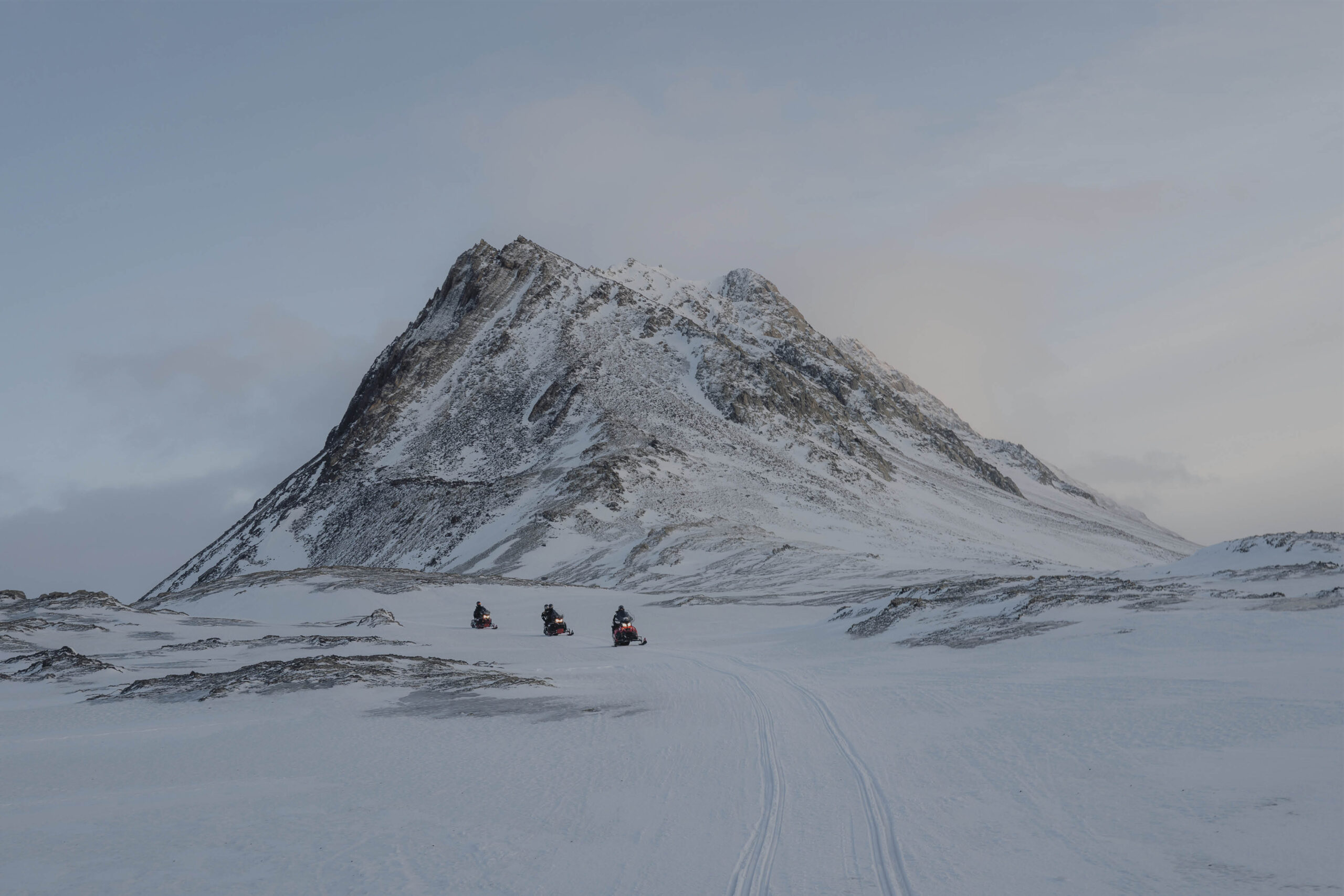
Na manhã seguinte, iniciámos a rota para oeste em motas de neve, em direção a uma antiga estação de rádio construída em 1933, que teve um papel crucial nas comunicações do arquipélago com o mundo exterior. Destruída durante a Segunda Grande Guerra e reconstruída em 1946, foi posteriormente transformada num pequeno hotel onde se observam regularmente ursos polares.
O guia informou-nos que ia instalar-se uma tempestade com ventos muito fortes e que a rota podia sofrer ajustes nas horas seguintes. «O mundo desconhecido torna possíveis todos os cenários e é aí que muitas vezes se formam as melhores memórias de uma viagem», pensei, como costume.
Apesar de ser proibido atrair ou procurar vida selvagem, sempre que o pano de fundo natural se agigantava, aproximavam-se mais renas da nossa rota. Por vezes, desacelerávamos para observar como se alimentavam de líquenes e plantas secas da tundra, onde a olho nu parecia não existir quase nada.
Depois de uma ou duas quedas na neve mais alta, que facilmente inclinava as motas para um dos lados, fizemos uma pausa para almoçar numa planície elevada. O menu desidratado era mais vasto do que no dia anterior – incluía chili de carne e vegetariano, tikka masala, caril com bacalhau fresco, bolonhesa e mac & cheese. Enquanto a água quente hidratava a comida, olhei para os rostos de cada um. Todos de sorriso rasgado, a fotografar a paisagem que nos envolvia. Tínhamos completado a primeira etapa do dia a um ritmo médio de 70 quilómetros por hora. Da parte da tarde íamos atravessar glaciares, que exigem uma condução mais rigorosa e prudente. O guia alertou-nos: «Se ficarem entalados em alguma fenda do glaciar, não saiam da mota. Vou ter convosco e ajudar-vos com a mota para evitar que caiam e fiquem presos».
Quando regressámos às motas, tínhamos instruções para não parar, de forma a chegar ao hotel ainda com luz natural. A paisagem que nos envolvia tinha faces arrojadamente poliédricas, mas sem plágio quando observada atentamente. Cada vale tinha a sua curvatura, cada elevação era uma montanha com vincos e roupagem própria, como cada um de nós vestia “armaduras” polares que pouco nos distinguiam. Quanto mais nos aproximávamos dos fiordes, mais o azul manchava a tela branca, dando enlevo ao que já era imensuravelmente belo.
Depois de sete horas de viagem, chegámos ao Isfjord Radio Hotel, recebidos com uma fogueira e um novo briefing sobre as regras de segurança daquelas coordenadas. Ali estávamos mais expostos a encontros com ursos polares – alguns haviam circundado o hotel na semana anterior. Era impreterível sair para a rua na companhia de um guia armado para acautelar a máxima segurança.
Durante o jantar, fomos informados que o vento iria aumentar significativamente e que teríamos de antecipar o nosso regresso, partindo a seguir ao pequeno-almoço. Tínhamos de aproveitar aquele momento para fazer sauna, pois já não haveria outra oportunidade. Fomos aos quartos vestir os fatos de banho e os robes para corrermos até à sauna, próxima do mar. A mais simples deslocação na rua exige zelo e observação constantes. No interior da sauna, víamos pouco além dos nossos vultos e das montanhas no horizonte. Rimo-nos com cenários hipotéticos de um encontro com um urso e esperámos até ao guia bater à porta, indicando que deveríamos voltar ao hotel.
De manhã, explorámos os arredores a pé, antes de partirmos para aquele que seria o troço mais difícil da viagem. Havia outro grupo a sair ao mesmo tempo e que iria ficar na mesma cabana remota, a norte de Longyearbyen. Primeiro tínhamos de regressar à povoação – a 90 quilómetros do hotel – e reavaliar as condições climatéricas.
Voltámos a atravessar fiordes, glaciares, vales e montanhas que, por mais que se assemelhassem, eram idílicas. A uma hora da cidade, parámos para uma pausa. Dessa vez, deitámo-nos na neve, distanciados uns dos outros. Fechámos os olhos e deixámo-nos ficar entregues à imponência daquele enorme manto branco, durante alguns minutos. Recordei-me de uma frase do explorador norueguês Fridtjof Nansen, que tinha lido recentemente – “A maioria das pessoas satisfaz-se demasiado cedo”.
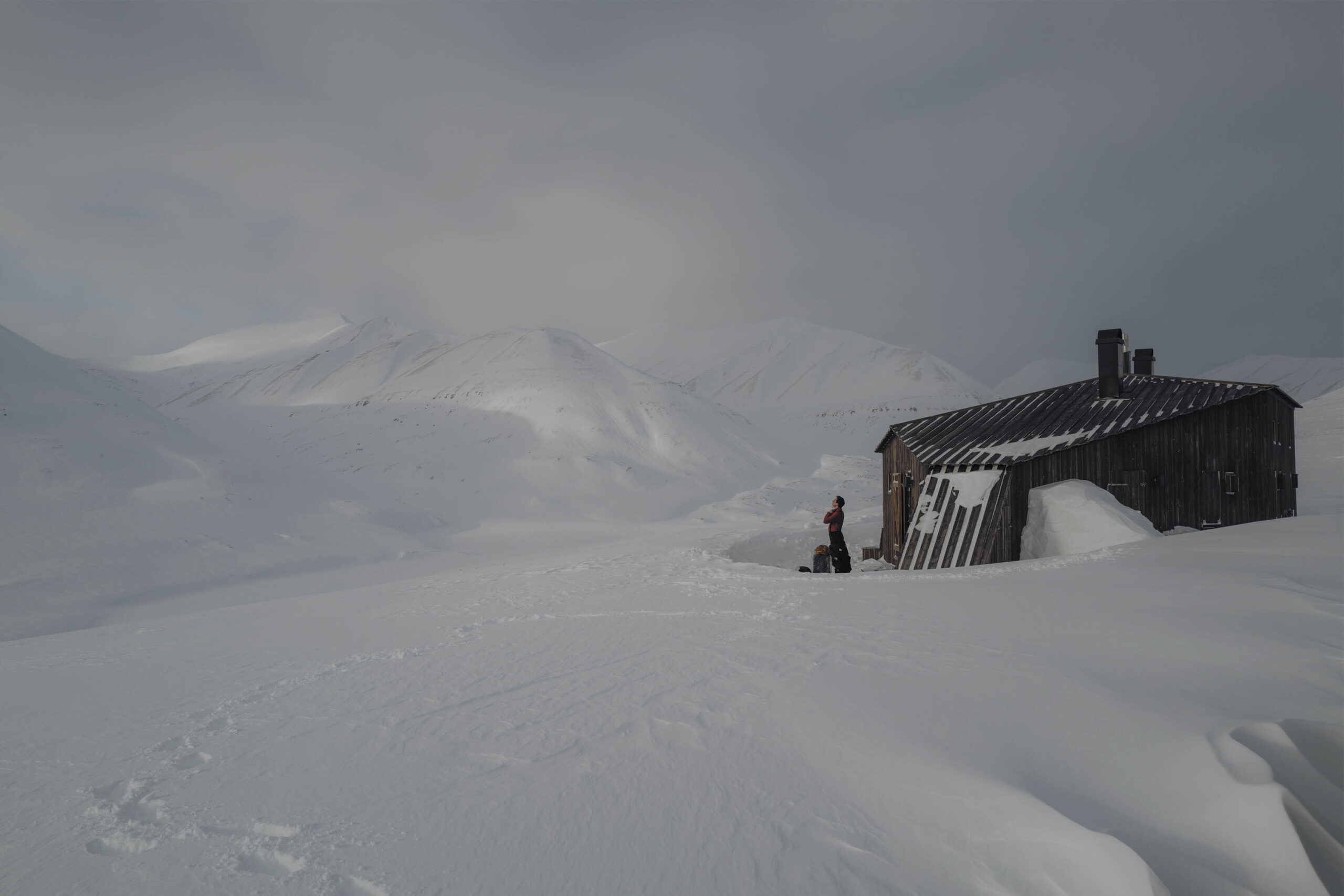
Quando partimos para a cabana onde ficaríamos nessa noite, eram quase seis horas. A tempestade polar já tinha começado a instalar-se. Em apenas 10 minutos de caminho, já pouco víamos além da mota imediatamente à nossa frente e de muita neve no ar. Parámos várias vezes para os dois guias avaliarem as condições e transmitirem indicações de como subir determinadas elevações, agora que a neve estava consideravelmente mais alta.
Quando chegámos a uma planície, parámos as motas numa linha horizontal. O vento soprava como nunca tinha presenciado. Para ouvirmos as vozes uns dos outros, tínhamos de aproximar-nos dos ouvidos e gritar. O guia pediu para aguardarmos com o outro grupo, enquanto ele ia marcar o percurso até à cabana e garantir que conseguíamos lá chegar.
Passados 20 minutos, o outro guia veio ter comigo e informou-me que tinha de ir à procura do nosso guia, cumprindo o protocolo de segurança. Perguntei: «O que fazemos caso as condições piorem repentinamente?». «Ficam aqui à nossa espera», respondeu-me assertivamente. Ajoelhei-me junto à mota e fechei os olhos por breves segundos.
Naquele momento, vivíamos um cenário aterrador. Olhei para trás à procura de sinais distantes de montanhas ou qualquer outro elemento que não fossem as motas de neve e os dois grupos. Já não víamos o monte que teríamos de subir, imediatamente à nossa frente. A pouca luz natural estava a esgotar-se. Quando o outro guia se preparava para subir a elevação, começámos a ver as luzes da mota do nosso. Tinha ficado sem GPS e com o agravamento da tempestade, demorou mais tempo a encontrar a cabana.
Aquele que seria um trajeto de 20 minutos, transformou-se numa viagem de quase duas horas. Voltámos a arrancar, um a um, dando espaço suficiente para que, se uma mota caísse, a mota de trás conseguisse parar em segurança. Neste caso, devíamos levantar o braço, indicando que tínhamos de parar. Na subida, duas das nossas motas caíram, mas a neve era tão fresca que a queda não magoava. A maior dificuldade era levantar novamente a mota.
À medida que avançávamos, tínhamos de ir olhando para a mota anterior para garantir que ninguém tinha ficado para trás. Uma dessas vezes em que olhei por cima do ombro, faltava um dos elementos do nosso grupo. Parámos para alertar que tínhamos de esperar. «Estás com medo?», perguntaram-me. «Estou com receio de não conseguirmos chegar à cabana com estas condições», respondi três vezes, por mal se ouvirem as nossas vozes. O elemento em falta reapareceu passados alguns minutos, tinha caído numa das curvas.
Quando chegámos à cabana fomos recebidos por dois guias de montanha que tinham preparado o jantar para nos acolher. Quando nos sentámos à mesa, já em manga curta, fizemos um brinde por termos sobrevivido àquele enorme desafio. Perguntei-lhes: «lembram-se da página da brochura em que descrevi exemplos do que seriam episódios de fun type 2 no Ártico?». «Não», disse prontamente um deles, gerando uma gargalhada abismal.
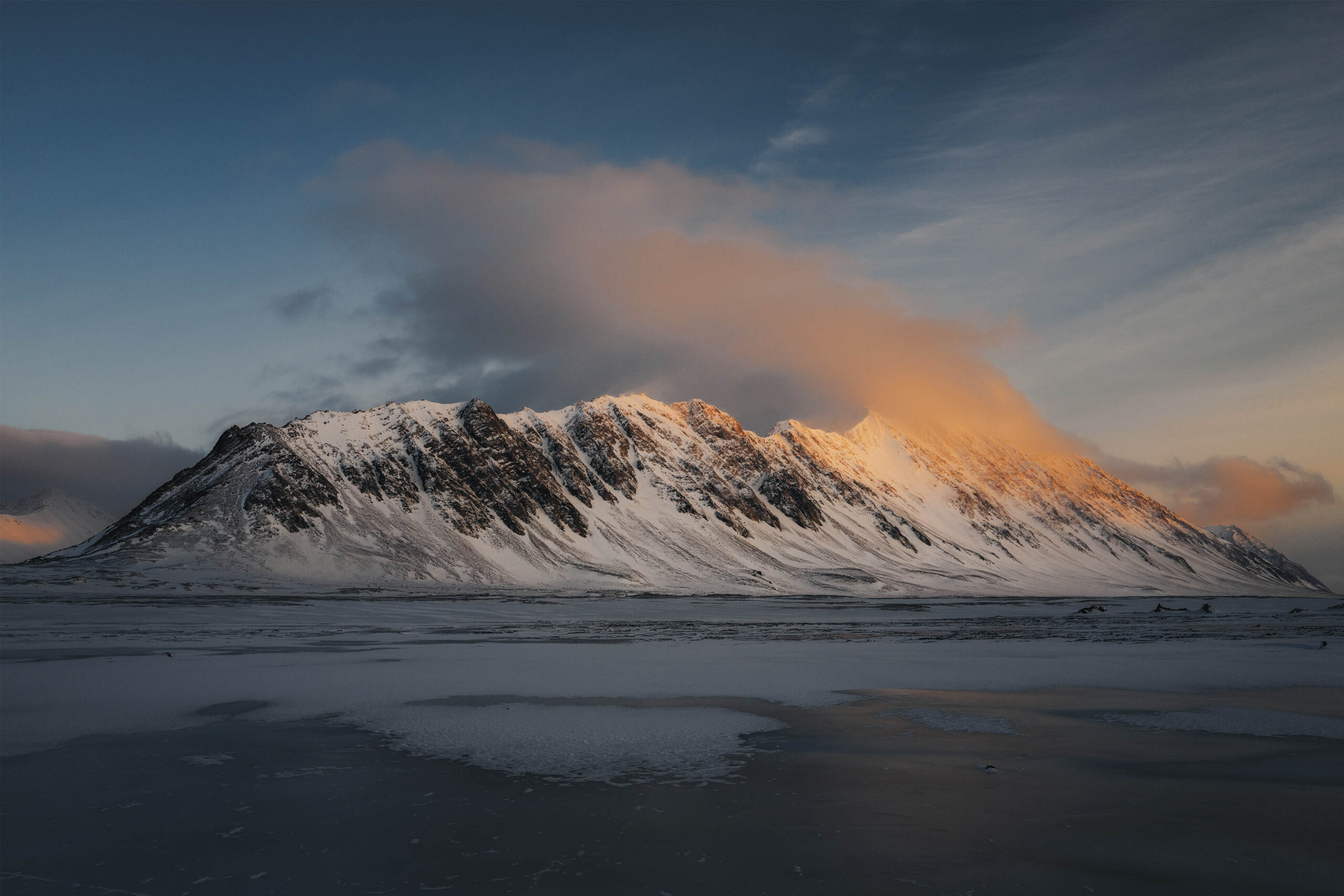
Naquela noite, os ventos atingiram os 210 quilómetros por hora. Várias pessoas relataram ter tido pesadelos, provavelmente efeito do que tínhamos vívido. Depois do pequeno-almoço, saímos para apreciar o que não tínhamos conseguido ver. Estávamos no alto de uma montanha com uma vista inebriante, iluminada pelos raios de sol matutinos.
Sentei-me na neve e voltei a fechar os olhos. Sentindo o silêncio magistral do Ártico, não ouvimos nada além dos nossos desejos e anseios. Essa é para muitos uma melodia exigente e inglória. É como se a mescla do silêncio desarmante com os 30 graus negativos nos elevasse a uma dimensão mais cristalina. A tempestade tinha enterrado as motas na neve. Era hora de limpá-las e regressar à cidade.
Durante centenas de anos, a maioria das pessoas chegava a Svalbard de barco. Em metade do ano era impossível chegar ou partir do arquipélago. Apesar da evolução dos tempos e do conforto das motas de neve, a tempestade permitiu-nos vislumbrar alguns desafios enfrentados por exploradores polares.
s do Pólo Norte geográfico, a entrega estoica deste grupo ao risco e à incerteza foi inextinguível. Testemunhámos como a bravura e a resiliência não são suficientes para determinadas aventuras. É necessária a ingenuidade própria do fruto desconhecido.