Kastom: Resistência vulcânica, carne e crença
Num arquipélago onde o tempo parece dobrar-se sobre si mesmo, os ni-vanuatus preservam tradições que desafiam a modernidade. Entre vulcões em erupção, aldeias quase invisíveis e rituais ancestrais, homens como Etienne e Amede resistem ao desaparecimento do kastom – a palavra, a prática e a memória que fazem de cada comunidade um universo único, frágil e, ao mesmo tempo, indomável.
Num arquipélago tão longínquo e descontínuo que os pedaços de terra firme parecem confundir-se com gotas de água no imensurável oceano, era assim que o via antes de o pisar. Sabia que procurava traços de identidade que me deixassem sem adjetivos para os descrever, mas encontrei um ecossistema que deu frutos mais doces, que tem desafios mais densos e que entrega mais do que promete, sobretudo à face da capacidade de crença dos humanos; uma matriz em que a terra, a espiritualidade e as tradições são sinónimos de existência, em que aprender e transmitir conhecimento podem ser atos de sobrevivência.
Em cada ilha floresceu um universo só seu, único mas transmissível. Se víssemos como tudo se criou, se adaptou e se transformou ao longo de séculos em que poucos foram visitados ou subjugados, talvez não acreditássemos no que estamos a ver.
Vanuatu fica longe: se houvesse além do outro lado do mundo, seria aí, mas para os ni-vanuatus – assim se chama quem chama “casa” a este arquipélago – é um mundo pequeno, em que o outro lado talvez seja só o outro lado da ilha circular, ou o outro lado da montanha. Aqui deve-se a diversidade cultural à geografia descontínua e à terra fértil que alimenta e conforta, sem que tivesse havido necessidade de expansão e conquista. Onde estes pequenos bolsos de hábitos que desafiam o tempo se fixaram, as ameaças nunca foram desprezíveis, mas com o galope da era moderna a frequência e o impacto dos perigos tornaram-se maiores. As novas religiões, na sua maioria cristãs, enviam missionários com discursos sagazes que trazem uma palavra que é nova para quem já cá estava, tão nova como os telefones, o cimento ou as calças de ganga, até porque em praticamente todo o Kastom a tradição é baseada na oralidade e não existe propriamente um sistema de escrita ou uma documentação cultural registada de outra forma que não pela vivência.
Kastom, na sua etimologia, tem origem em costume, tradição – é a versão da palavra inglesa custom em bislama, o crioulo que se fala no arquipélago. O kastom está em risco de desaparecer e, apesar de ser frágil na sua natureza, é-lhe também inerente uma força e resistência sem par por ter chegado até aos dias de hoje. Longe das tribos incontactadas e dos rituais canibais de antes (que se saiba, mas ainda há alguns lugares desconhecidos, aos quais forasteiros não têm acesso e onde talvez ainda se pratiquem), Vanuatu agora tem templos mórmones no meio da sua característica vegetação densa, com missionários que evangelizam e pregam que os universos animistas que aqui florescem chocam com a palavra do Deus, que vem em salvação. Mas a salvação mais urgente é a da cultura atemporal e de tradições verbais que se perderão para sempre se não forem transmitidas sucessivamente às novas gerações. Como é que se faz tal coisa quando, ao domingo, se vestem as crianças de branco, se lhes penteia o cabelo e se levam pela mão à igreja?
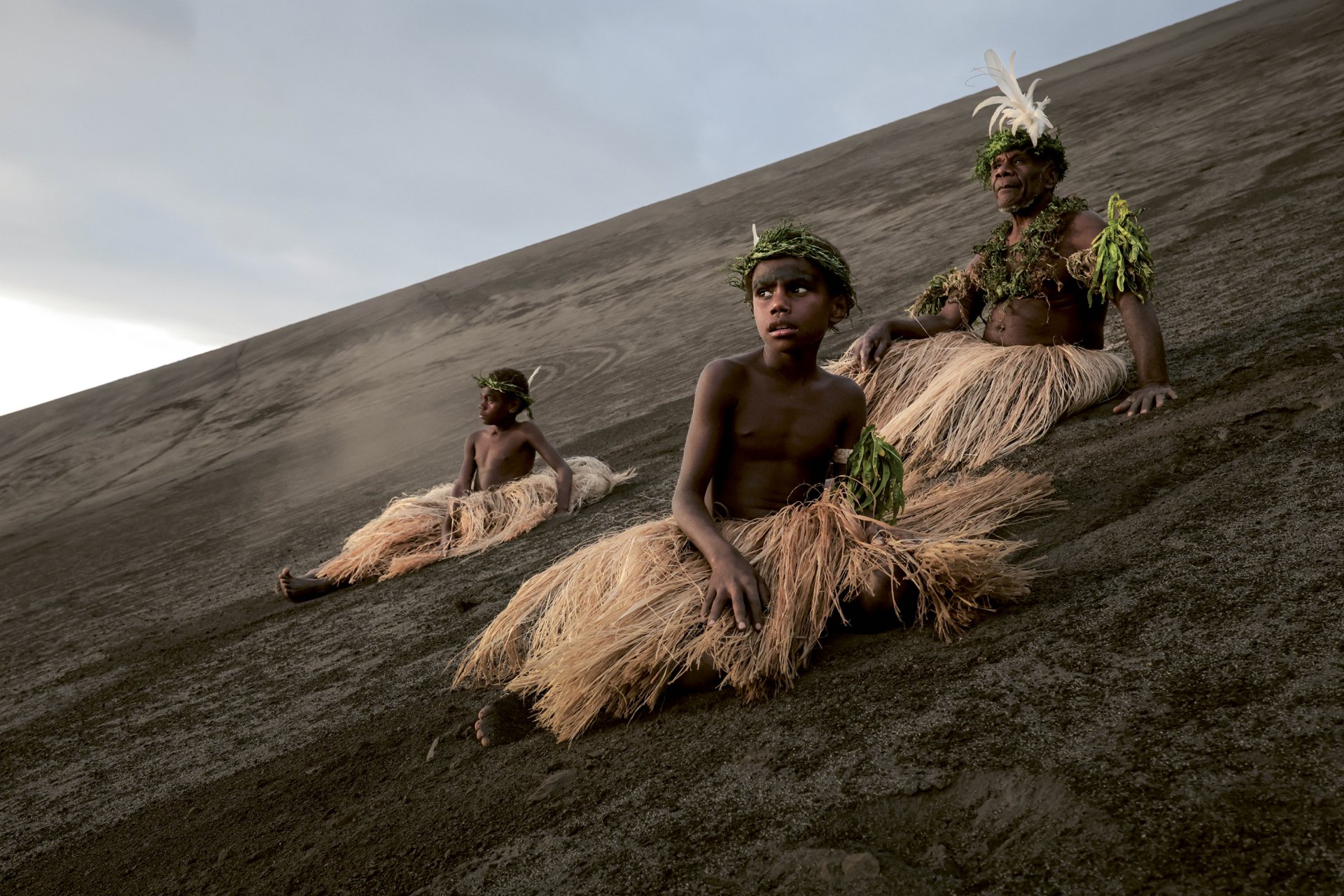
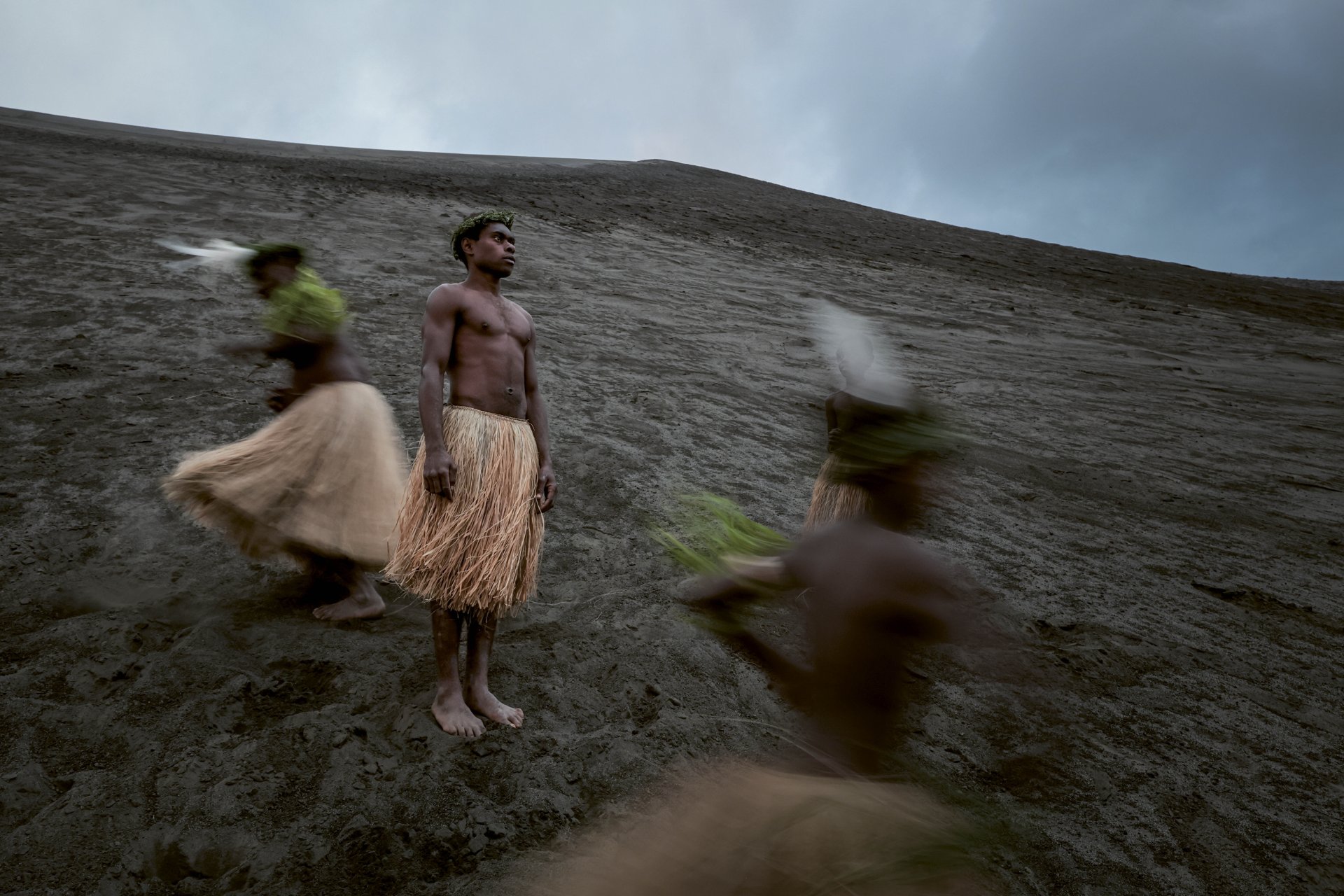
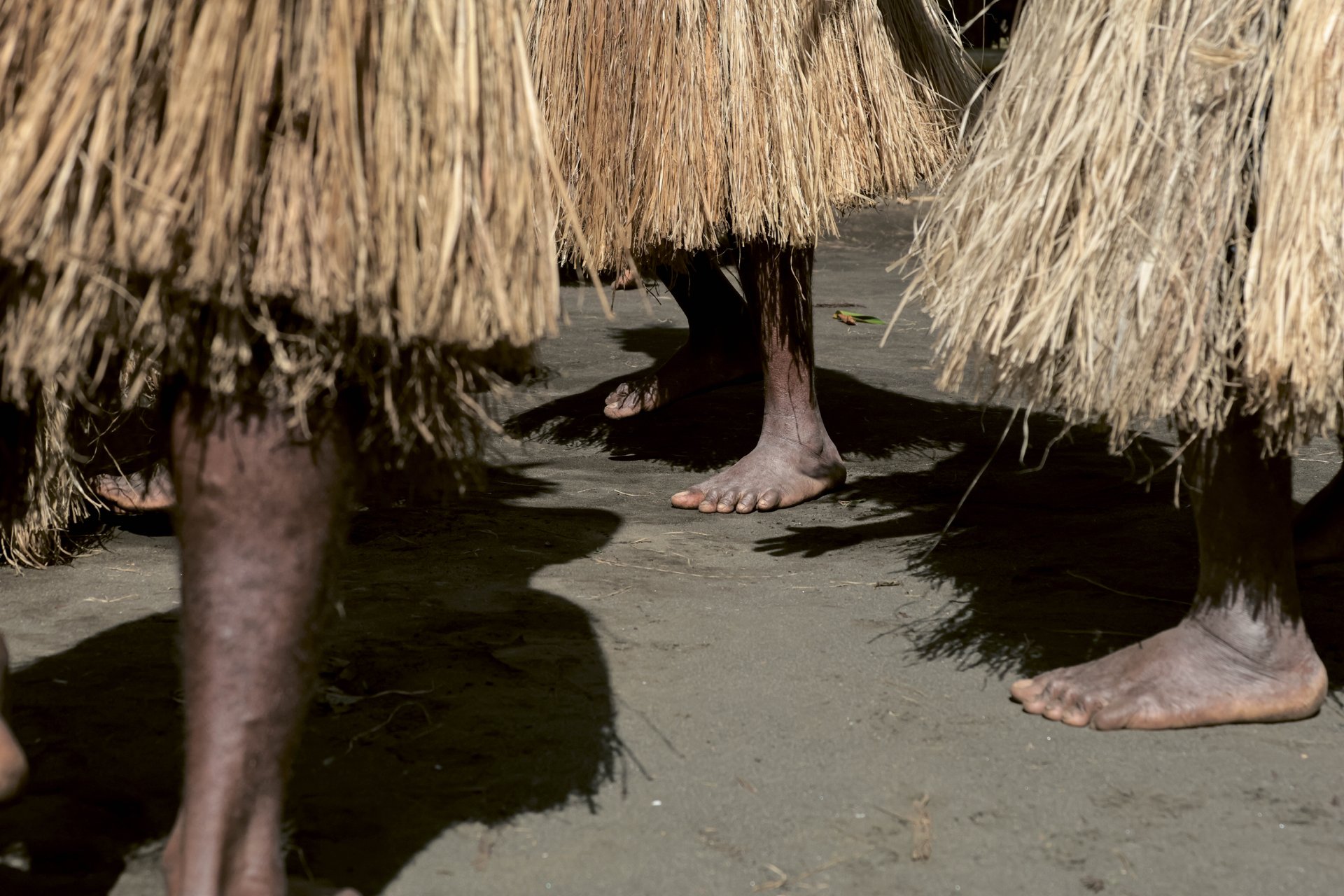
Em Tanna, uma ilha no Sul de Vanuatu famosa pelo monte Yasur, o vulcão ativo em constante erupção mais acessível do mundo, a pequena aldeia de Imaio veste-se da maneira como manda o seu kastom – com coroas de feto e longas saias de ráfia e bananeira seca – apenas para celebrar circuncisões, fazer luto por mortes ou receber visitas. Apesar dos raros momentos que ainda o justificam, passou a ser um ritual de entretenimento, uma interpretação artificialmente exagerada que chegou a esse ponto graças às gorjetas dos turistas. Bastou uma cordilheira de tamanho diminuto e o consequente adensamento da vegetação para que, na aldeia de Yakel, também eles ancestralmente ligados ao vulcão, se vivesse numa bolha, criada em tempos pela geografia, mas hoje isolando-os por opção. Aqui, no meio das duas dúzias de casas tradicionais existe uma em cimento: “São jovens que vão apanhar fruta para a Austrália e quando voltam trazem estas novas ideias, mas não duram muito; já se foram embora outra vez e ninguém quer o que eles construíram…” Para as pessoas de Yakel, a roupa do dia-a-dia é ainda feita dessas folhas de ráfia e bananeira, só se veste uma camisola de manga curta de vez em quando, para ir ao mercado na cidade. O ar que respiram é o mesmo dos imaios e a proximidade poderia ter ditado outra atualidade, embora sejam quase espectros opostos do kastom: um feito como passatempo, outro como modo de vida.
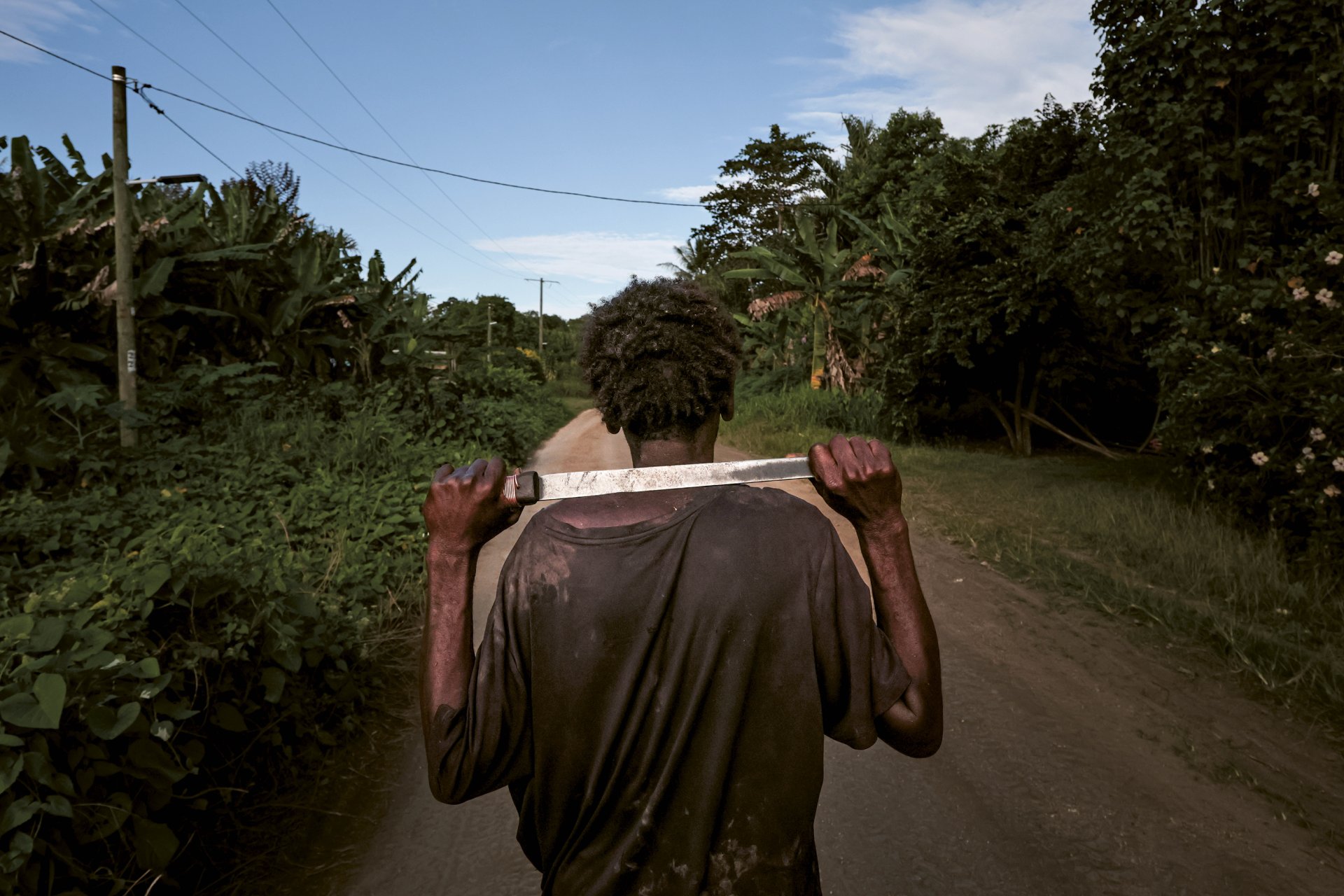
Ainda existem resistentes à palavra dos pastores: Etienne é um deles. Nasceu na ilha de Malekula e por lá ficou. Não sabe bem de onde vem a sua ancestralidade e não pertence a nenhum grupo étnico que se possa nomear como fazedor de kastom, mas sabe que existe urgência. Conheci-o depois de trocar uma mensagem com ele a pedir um teto, e tive sorte quando não só acedeu como ainda me contou os segredos da sua região. Malekula tem uma série de pequenas ilhas ao seu largo, próximas o suficiente para estarem em sintonia, mas afastadas o suficiente para que nelas tenham criado raízes tradições singulares. Quando cheguei à sua casa, conversámos sobre o que já tinha visto pelo país fora e sobre o que procurava. Às vezes, ter uma máquina fotográfica na mão pode não ser o aliado que pensamos, antes pelo contrário, mas Etienne não se deteve porque dentro do seu remoinho de ideias existe uma constante: a de não concordar com o rumo que o kastom tomou, de a sua fragilidade inerente ter passado a ser risco de vida latente. Apesar de a sua mulher e os seus dois filhos serem assíduos na igreja evangélica local, ele não se entregou e foi, em vez disso, puxado pela ancestralidade inerente ao legado animista coletivo, mais do que qualquer outra coisa. Sem o querer, acabou por se tornar num agente importante da preservação dos costumes, embora sinta o efeito isolador de estar fora de uma das novas religiões que chegaram em força.
“Vocês não podem fazer isto, é uma prática das trevas”, conta ele sobre o que mais se ouvia nos sermões iniciais. A conotação com o oculto talvez venha do facto de estas culturas terem hábitos que não são compreendidos por quem está de fora, como os rituais canibais que eram feitos apenas no culminar de conflitos, como golpe final e intransponível de, por exemplo, uma tomada de terreno indevida ou a morte por inimigos de um membro da comunidade. Etienne levou-me a um dos poucos lugares onde os restos humanos ainda estão visíveis e, dada a vegetação envolvente e o estado dos ossos existentes, estes terão sido depositados já eu teria nascido.
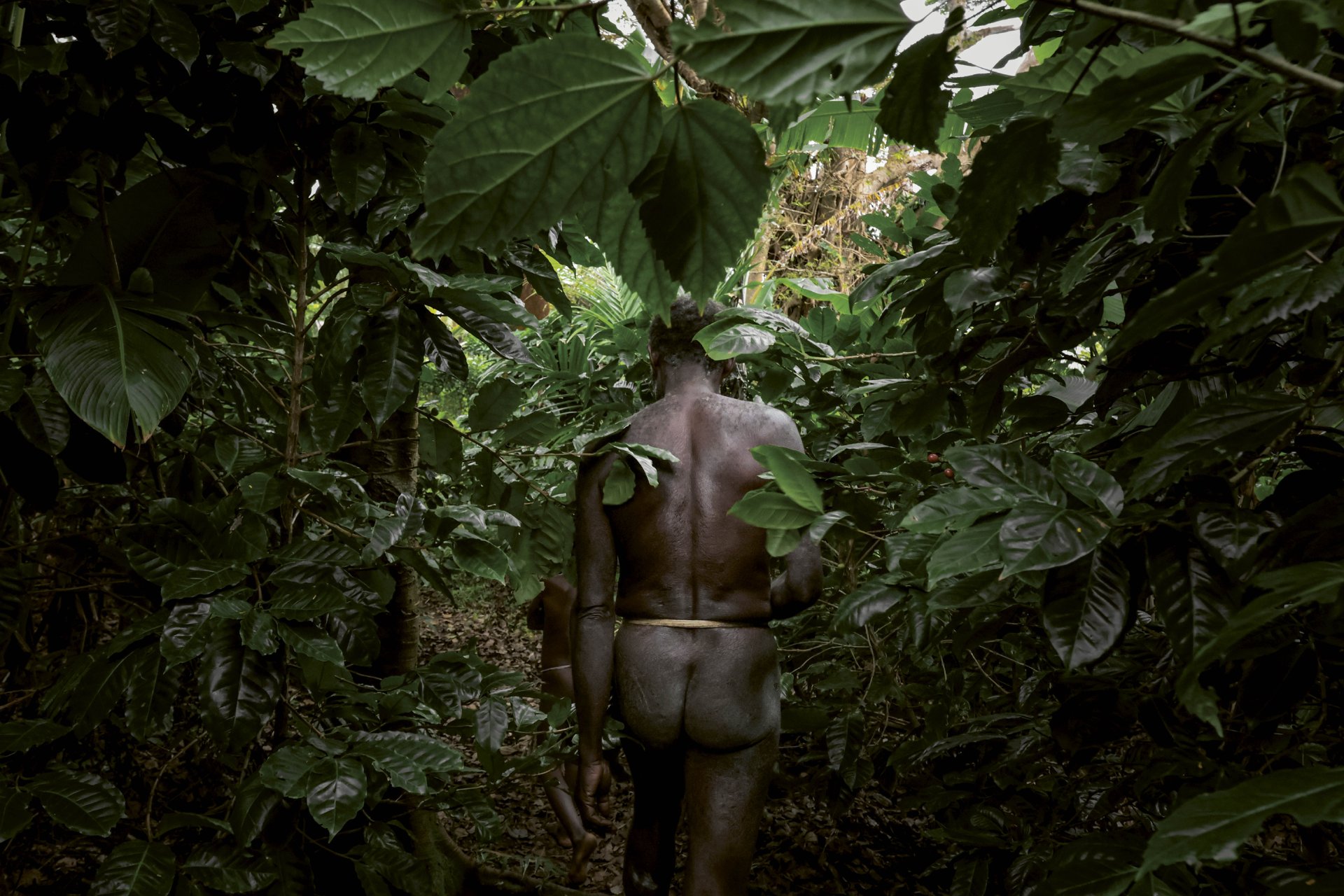
Sou puxado de volta à terra e percebo que, se calhar e com alguma probabilidade, enquanto eu jogava Game Boy, aqui haveria humanos a consumir outros num ritual longo que os impedia de sair do nakamal (clareira sagrada nas comunidades ni-vanuatus) durante 30 dias, sem sequer poderem contactar com a sua própria família. Este lugar fica escondido, um par de horas monte acima, pelo meio de árvores de cacau que crescem sem regra (nem aproveitamento) e caminhos indefinidos pelo meio de pequenas aldeias com não mais de três casas feitas de malha de ráfia. Paramos para pedir indicações quando a vegetação mutante torna o caminho irreconhecível. Finalmente, chegamos: está tudo no lugar – os ossos, as ferramentas, os altares usados nos rituais envolvidos no processo, que o Etienne me explica para que servem.
Nota-se que falar sobre o que se pode perder lhe dá propósito. A história é longa e detalhada, apesar de não existirem outros registos que se aliem à pouca arqueologia e tradição oral, passada de geração em geração, para se poderem confirmar e confrontar factos. Mas no kastom essa centralização na palavra e no hábito ensinado aos filhos e aos netos é o que o caracteriza tanto como dinâmico como frágil.
Aqui em Malekula há um kastom que se reproduz nos folhetos turísticos e ecoa no que se vê sobre o país, mas, com tão pouca gente a conseguir chegar nos dois voos semanais num Twin Otter de 19 lugares e o Big Sista – o barco que faz a travessia de norte a sul do arquipélago – a demorar muitas vezes mais de duas semanas a voltar a atracar por cá, ir ver as Small Nambas, assim chamadas pela indumentária que lhes é característica (uma namba é a proteção peniana usada comummente por estas bandas), não parece ser uma atração, mas é.
Depois da apresentação da tribo e da mostra cultural, com redundâncias e um tom quase sem alma pela repetição e falta de propósito, Amede, o chefe da comunidade, aproxima-se a esbanjar um sorriso pela primeira vez, parecendo que viu em mim um amigo de longa data, e diz: “Devias vir beber kava connosco amanhã, fora daqui. É na vila lá em cima, o Etienne sabe onde é.” O meio é pequeno, já não me espanta que toda a gente saiba que estou a dormir em casa dele, e que a sua mulher, Lina, se esteja a sentar comigo no chão todos os serões, durante os quais partilhamos deliciosos laplap.
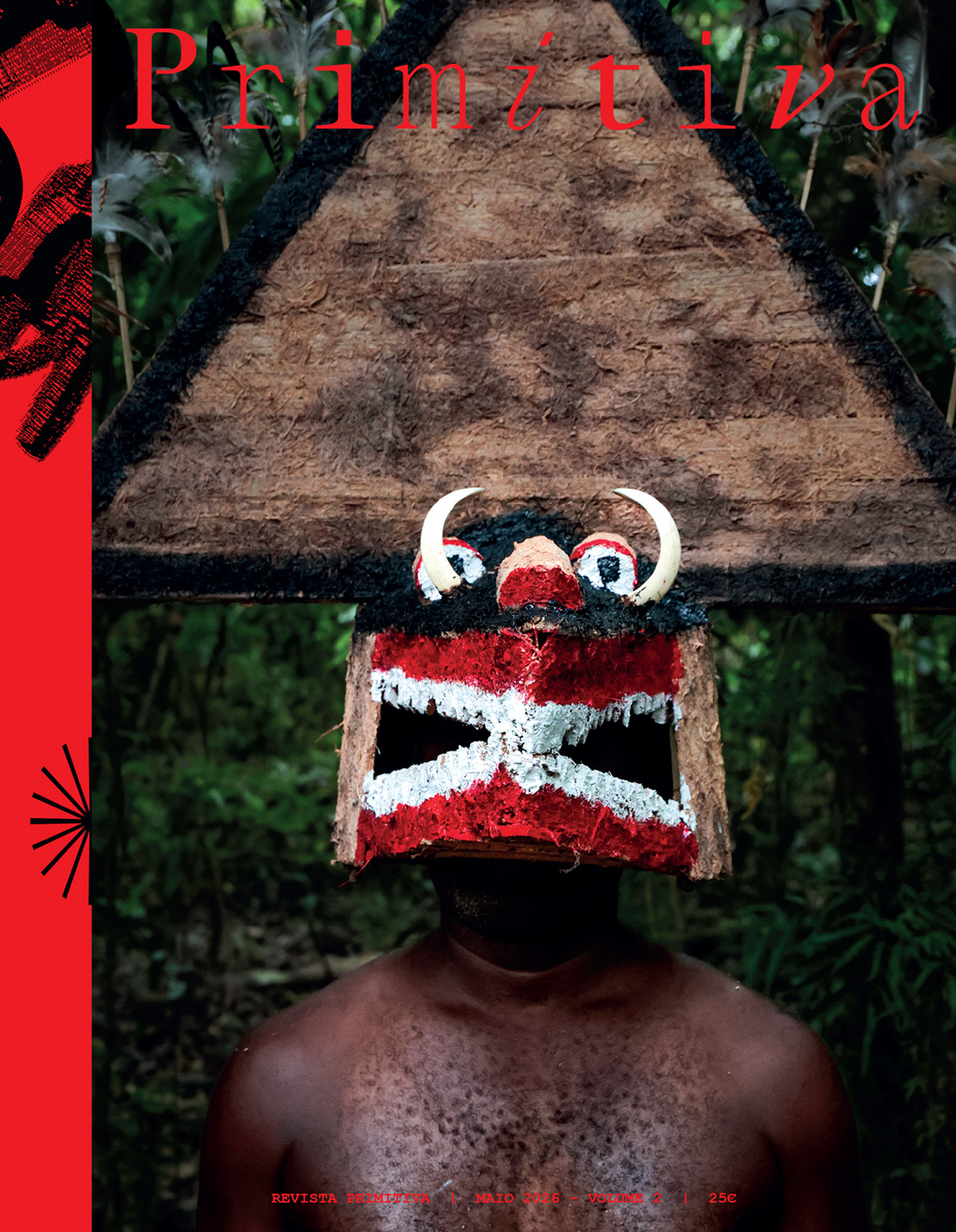
No dia seguinte, apareci na vila lá em cima, levo um maço de cigarros e latas de refrigerante que são muito bem-vindos como presentes de agradecimento. Em troca, ajudo a moer e a filtrar o kava, uma raiz entorpecente que se toma socialmente, quase sempre sem limite. Cada concha de kava produz aproximação, e as conversas soltas aprofundam-se num misto de francês, inglês e bislama: “O meu avô fazia máscaras de peixes e aves, coisas enormes que se usavam na cabeça, mas isso perdeu-se. O que eles estão ali a dizer fez as pessoas afastarem-se da tradição”, diz-me o meu anfitrião Amede, enquanto inclina o queixo na direção de uma missa ao ar livre a poucas dezenas de metros de distância, atrás de algumas casas rodeadas de árvores de fruto, como que a estender o indicador a apontar culpa.
Aqui são poucas as pessoas que, como ele, ainda se lembram de rituais e artefactos definidores de identidade, e que estão a viver para testemunhar essa identidade desaparecer num nada. Enquanto trocámos ideias e falámos da importância da preservação da cultura, ouvia o Etienne a falar das suas fragilidades na tentativa de o fazer. Descrevia os anos em que era criança, quando se via maior diversidade e se conheciam mais expressões do kastom. Falou-me de uma pequena ilha ali perto onde não havia quase nada, embora lá morasse uma tribo em que alguns homens continuavam a fazer o que conseguiam em prol da ambiciosa tarefa de preservação. Não hesitei em pedir-lhe que me levasse lá.
Tudo no caminho parecia mundano, do barco pequeno com uma senhora carregada com um cacho de bananas inteiro, até ao atracar na areia da praia para onde estavam voltadas as primeiras casas. Entrámos pelo labirinto de ruas de areia que ia dando lugar a matéria morta no chão enquanto ao redor o verde ficava cada vez mais dominante, até que surge um grupo de homens que me levou a conhecer algo que poucos viram – até agora, enquanto escrevo esta história e mostro estas fotografias, apenas num dos festivais nacionais de kastom – e o Etienne dizia-me: “És o primeiro estrangeiro a vir conhecer Uripiv.”
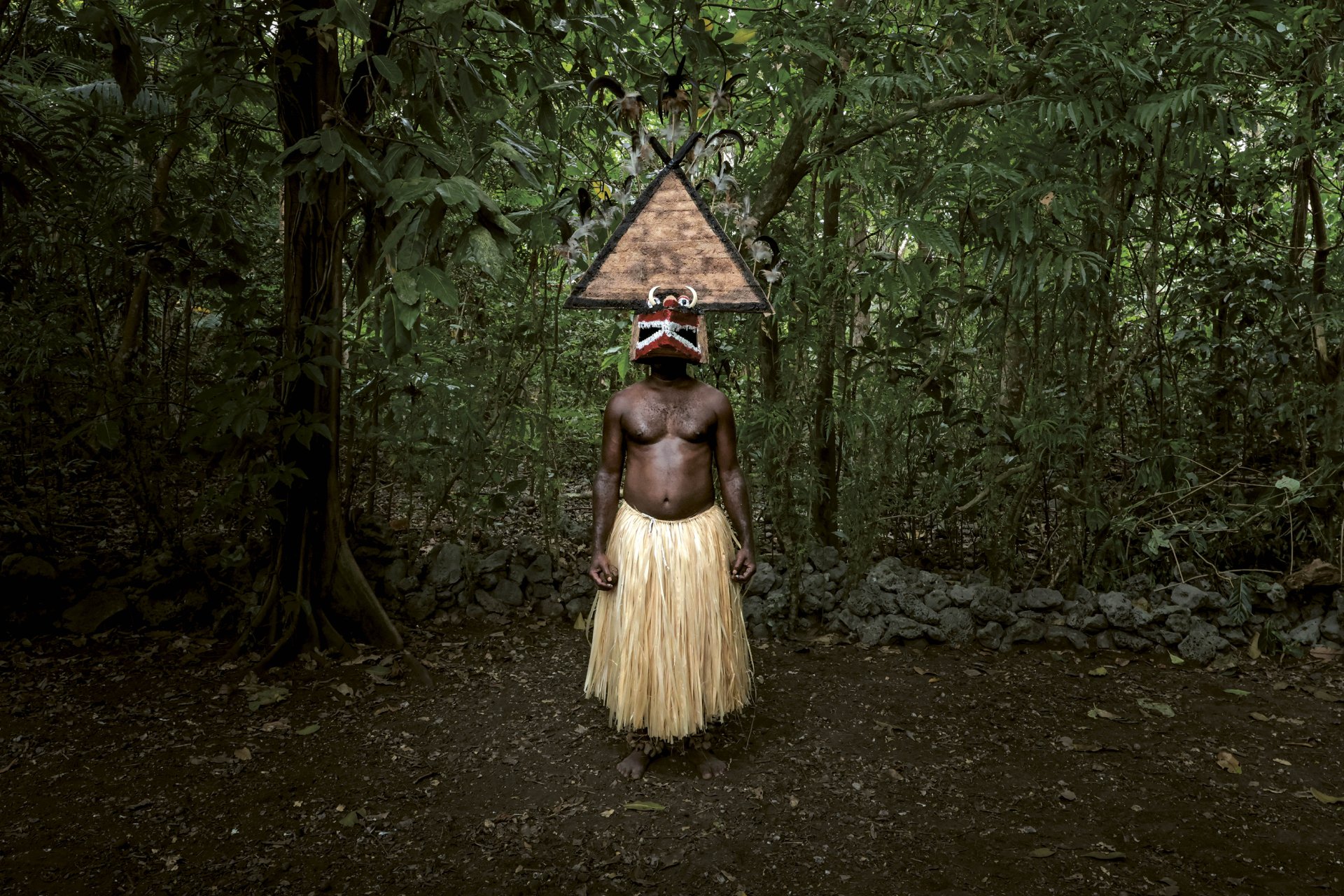
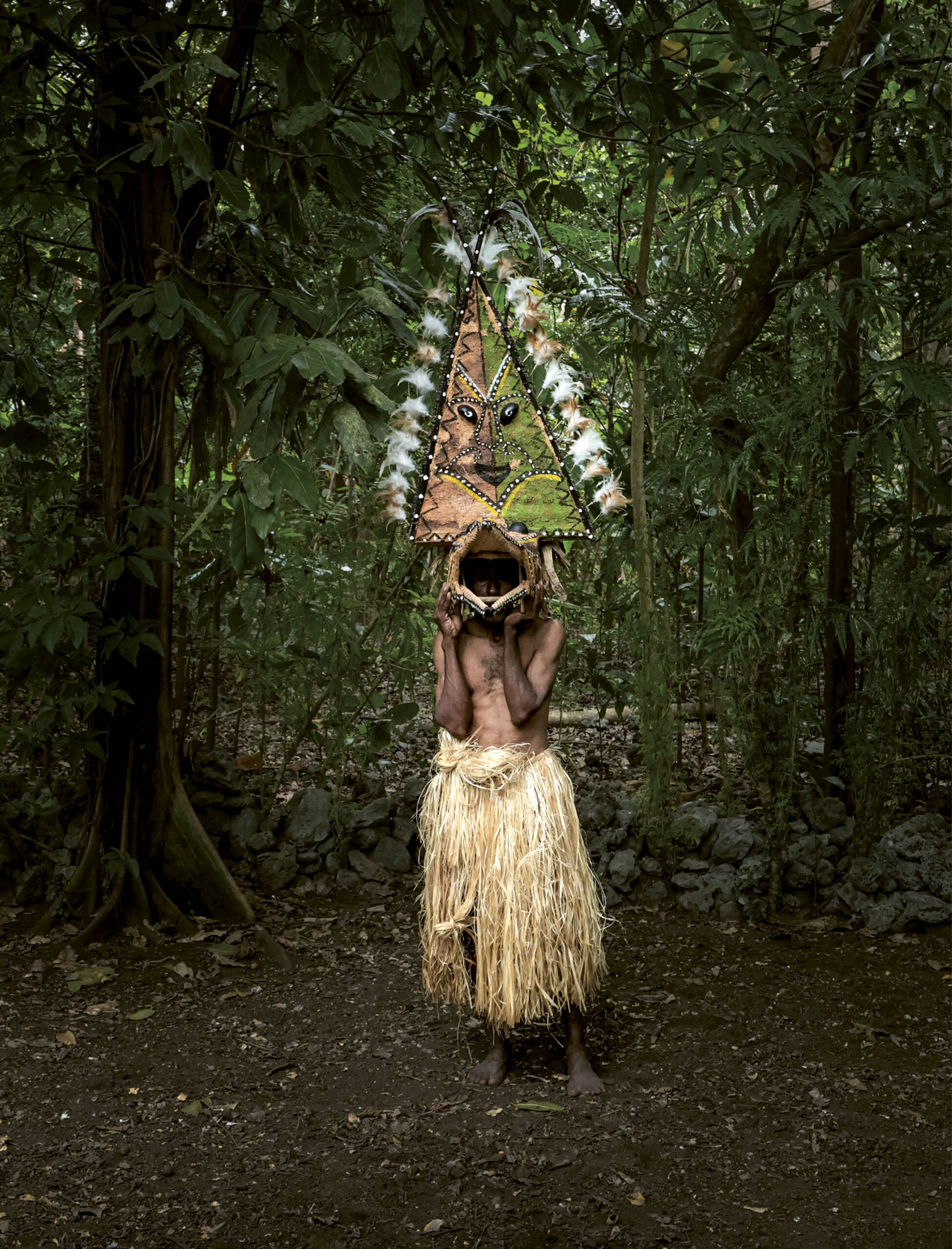
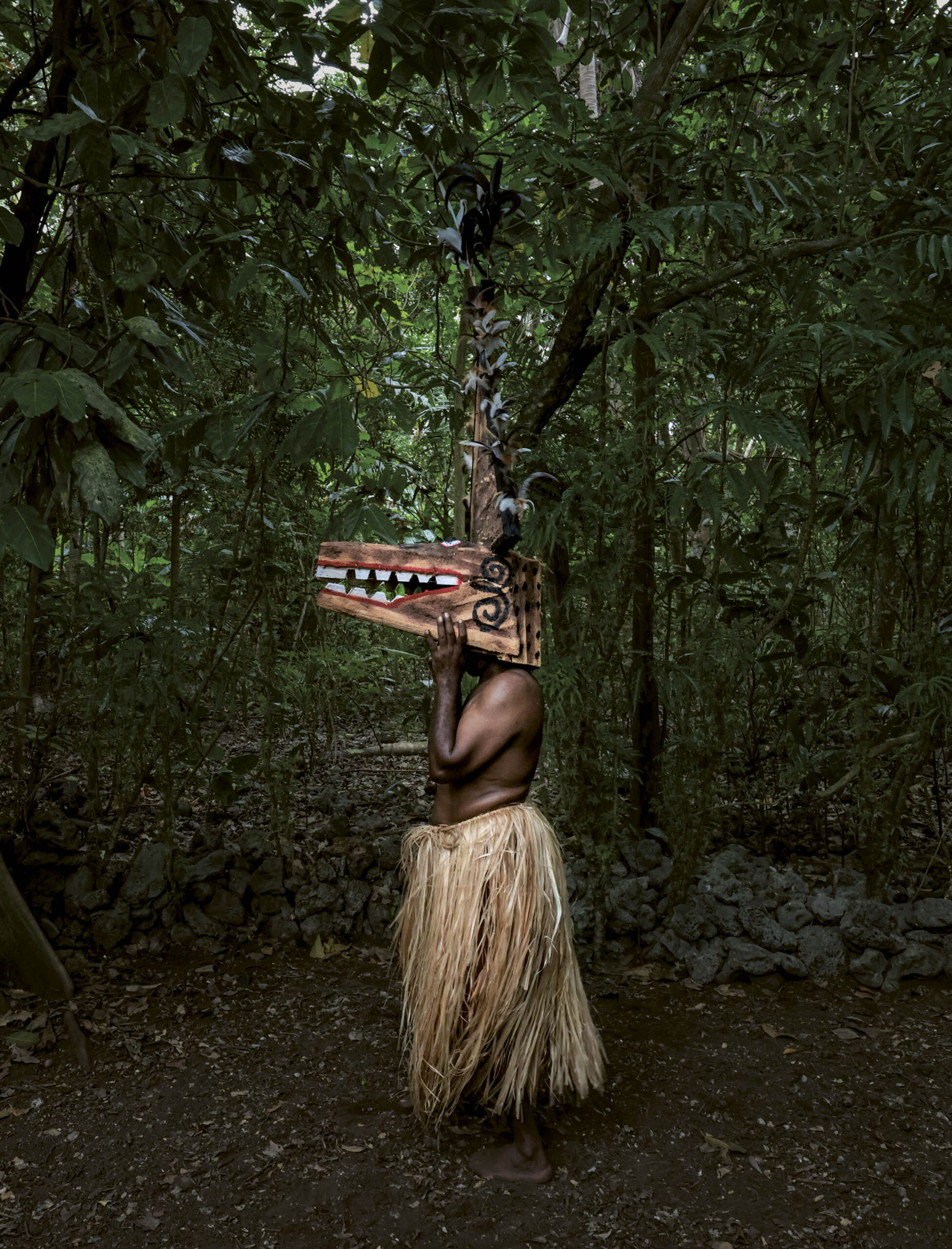
Como se não bastasse a estreia e a hospitalidade, quiseram preparar uma demonstração do costume local: o único documentado que envolve máscaras triangulares feitas de novo todos os anos, com raízes de mandioca e taro, folhas de bananeira e decoradas com tinta e penas de galinha. É um legado material que atravessou gerações, até eu o poder testemunhar.
Há algo de majestoso nestas criações, talvez por serem tão singulares, talvez por serem tão raras, mas grande parte desse impacto deve-se, sem dúvida, ao peso de terem chegado até hoje. Como em tudo no kastom, a origem ancestral, idealização e execução giram à volta desta natureza crua, envolvente e fértil, que o vai deixando de ser, pouco a pouco. Estas máscaras de Uripiv são javalis, crocodilos de água salgada, pássaros endémicos que vivem na biodiversidade e nos mitos locais, enquanto o ritual em que eram utilizadas, chamado namagi, era o de nomeação – hereditária – de um novo chefe da tribo. O namagi e, com ele, os artefactos e a maestria foram condenados a desaparecer quando os primeiros missionários chegaram aqui. Considerada imprópria, esta tradição mudou até se tornar uma memória frágil, não fossem estes homens resistir ao destino certo que lhes foi imposto. Enquanto me maravilho com este encontro, vejo que os olhos do Etienne brilham de orgulho porque está a ver vivo algo que o move e que não o deixa dormir à noite.
O kastom não é um tema macio: oficialmente, até é sublinhado como identidade e herança, mas a soberania do povo dita que escolha, ou seja levado a escolher, crenças incompatíveis com o que os seus antepassados criaram e nutriram. Etienne, Amede e os homens de Uripiv fazem parte de uma minoria que se arrisca a não se enquadrar, em casos até podendo ser excomungada, para serem forças ativas do resgate desta herança e agentes da sua continuidade no tempo. O risco estende-se a todo o arquipélago e só graças a quem nada contra a corrente se dita a sobrevivência do que é real, da tradição falada e da ligação à ancestralidade nalguns ni-vanuatus de hoje e talvez nos de amanhã.